Welcome to djgaston.com

Tag: Ozarks

Arkansas and Ozarks History Worth Knowing

There’s a lot of history right in our own backyard. These are a few places worth taking the boys to see.

Quick answer Arkansas became a state on June 15, 1836. The Cherokee Trail of Tears crossed northwest Arkansas in 1838 and 1839. The Battle of Pea Ridge was fought on March 7 and 8, 1862. The Buffalo became America’s first national river on March 1, 1972. And the largest diamond ever found in the U.S. came out of the ground near Murfreesboro in 1924.
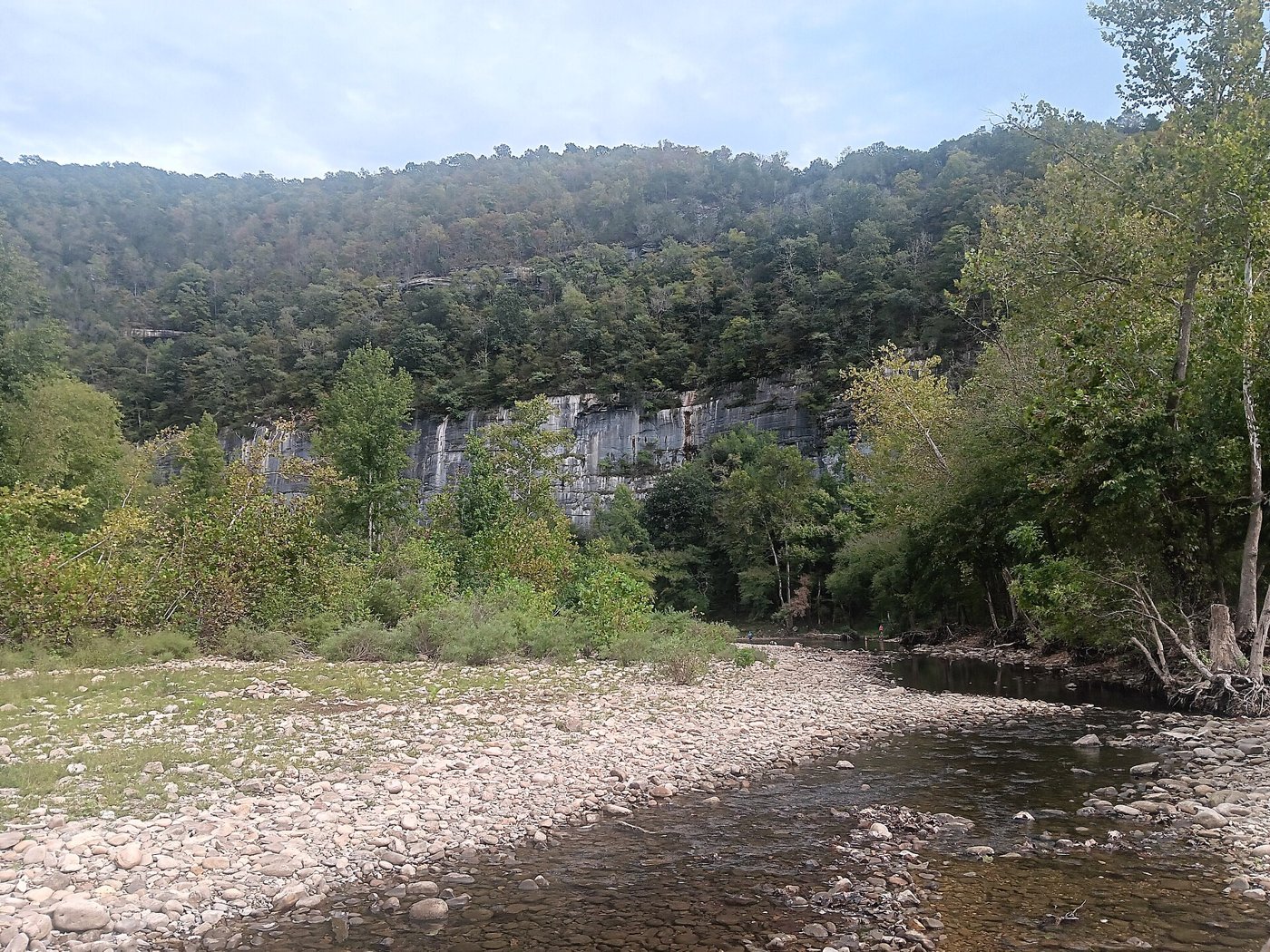
Arkansas and Ozarks History Worth Knowing
Photo: Brandonrush / Wikimedia Commons, CC0
Places to see it

  • Pea Ridge National Military Park (Garfield)
  • Trail of Tears National Historic Trail auto-tour signs in Benton and Washington counties
  • Buffalo National River (Newton, Searcy, Marion and Baxter counties)
  • Ozark Folk Center State Park (Mountain View)
  • Crater of Diamonds State Park (Murfreesboro)

The highlights

  1. Statehood, 1836. Arkansas became the 25th state on June 15, 1836.
  2. The Trail of Tears. In the 1830s, tens of thousands of Native Americans forced from their homelands in the Southeast passed through Arkansas, including Creek (Muscogee), Cherokee, Choctaw, Chickasaw and Seminole people. From October 1838 to March 1839, Cherokee Nation detachments of about 1,000 people each crossed northwest Arkansas, most entering just east of Pea Ridge and turning west near Fayetteville. Many died of disease and cold along the way. In 1987, Congress recognized this Northern Route as the land route of the Trail of Tears National Historic Trail.
  3. Pea Ridge, 1862. More than 23,000 soldiers fought at Pea Ridge, in Benton County, on March 7 and 8, 1862. Today it’s Pea Ridge National Military Park.
  4. The Buffalo River fight. For decades, the U.S. Army Corps of Engineers planned dams on the Buffalo. Conservationists, including the Ozark Society, fought back, and the dam plans were dropped. On March 1, 1972, the Buffalo became the first national river in the United States. The park protects 135 miles of the 150-mile river, one of the few remaining free-flowing rivers in the lower 48. In 2019 it became Arkansas’s first International Dark Sky Park.
  5. Ozark folk life. The Ozark Folk Center State Park in Mountain View keeps traditional Ozark music and crafts alive, with demonstrations of things like blacksmithing, basketry, quilting and woodcarving.
  6. Diamonds, 1924. At what’s now Crater of Diamonds State Park, a worker found the 40.23-carat “Uncle Sam” in 1924. It’s still the largest diamond ever found in the United States. The state bought the site in 1972. Visitors can still search the field and keep what they find.
Venomous Snakes of Arkansas and the Ozarks: How to Tell, What to Do

With boys running around outside, knowing which snakes to leave alone is just part of living in Arkansas.

Quick answer Arkansas has six venomous snakes: copperhead, cottonmouth, timber rattlesnake, western pigmy rattlesnake, western diamondback rattlesnake and the rare Texas coral snake. Give every snake room and don’t handle it. If someone is bitten, call 911 or get to a hospital fast. No cutting, sucking, tourniquets or ice.
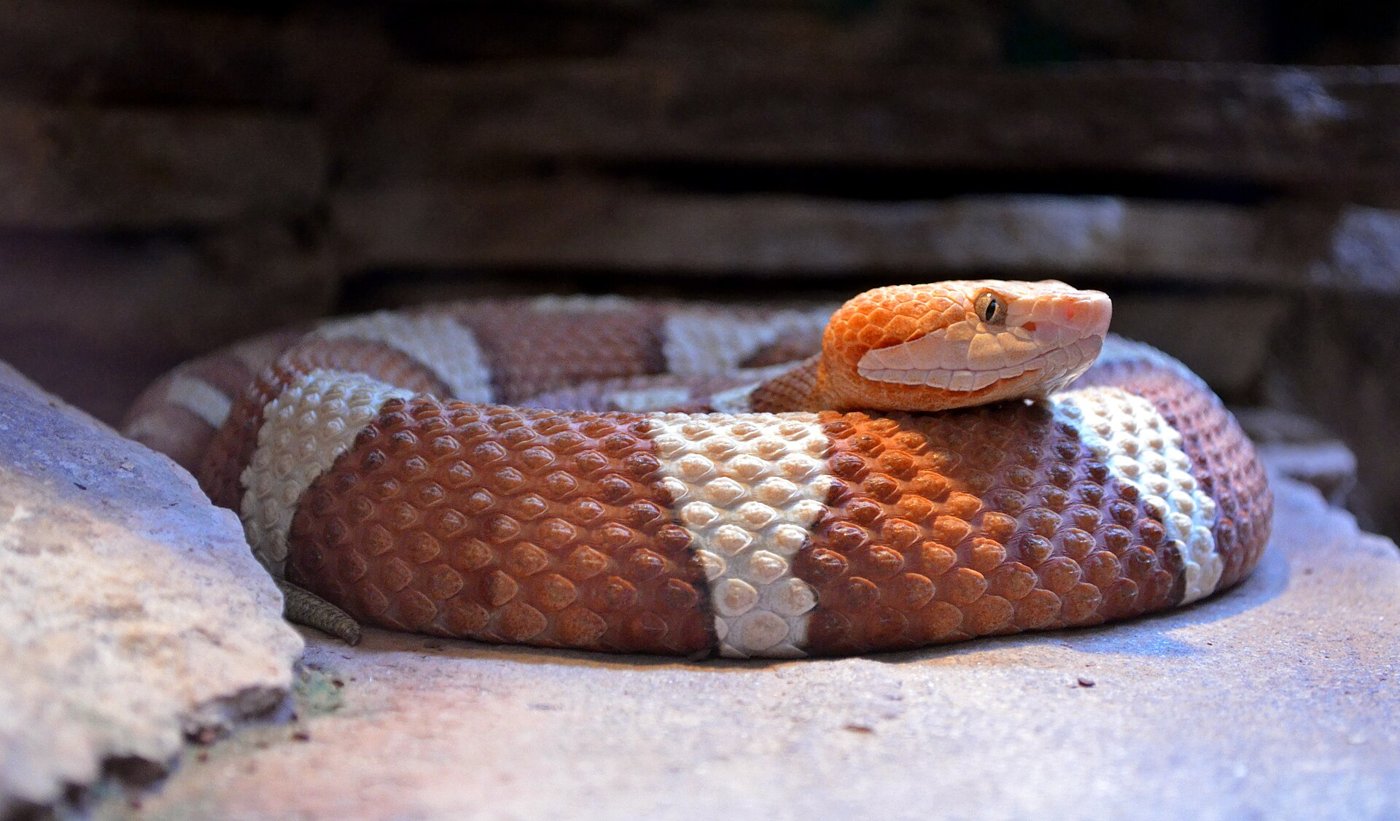
Venomous Snakes of Arkansas and the Ozarks: How to Tell, What to Do
Photo: Selbymay / Wikimedia Commons, CC BY-SA 3.0
What helps

  • Boots and long pants in brush and tall grass
  • Leather gloves for moving brush, rocks or wood piles
  • A flashlight at night
  • A phone for a photo (from a safe distance) and to call for help

Know them, avoid them, and what to do after a bite

  1. Copperhead (statewide). Tan to coppery with darker brown hourglass bands. From the side, the half-hourglass looks like a Hershey’s Kiss. Adults are about 1.5 to 3 feet. Young ones have a bright yellow tail tip. Great camouflage in leaf litter, so watch where you step and reach.
  2. Cottonmouth, or water moccasin (statewide, near water). Thick-bodied, dark brown to nearly black as an adult, with a dark stripe through the eye. When bothered it may gape and show the white inside of its mouth. Young ones are boldly banded with a yellowish-green tail.
  3. Timber rattlesnake (statewide). Gray, yellowish or light brown with dark, jagged crossbands, often a rust-colored stripe down the back, and a solid dark “velvet” tail ending in a rattle.
  4. Western pigmy rattlesnake (statewide). Small and gray with black blotches and a rust-colored stripe down the back. The rattle is tiny and can be hard to hear.
  5. Western diamondback (west-central Arkansas). Brown and tan diamond-shaped blotches and a black-and-white banded “coon tail” before the rattle. Found on rocky, open hillsides.
  6. Texas coral snake (rare, southwest Arkansas). Red, yellow and black bands that go all the way around, with red touching yellow and a black snout. Some harmless snakes, like milk snakes, have red, black and yellow bands too, so look but don’t touch.
  7. Don’t rely on eye shape. Coral snakes have round pupils. And if you’re close enough to see a snake’s pupils, you’re too close.
  8. Avoid bites. Snakes are most active at dawn and dusk and in warm weather. Stay out of tall grass and leaf piles when you can, and don’t reach into wood piles or under rocks with bare hands. Rattlesnakes can strike a third or more of their body length, and they don’t always rattle first.
  9. If someone is bitten: get away from the snake, keep calm and call 911 or have someone drive you to a hospital. Don’t drive yourself. Take off rings and watches before swelling starts. Keep the bitten limb in a comfortable, neutral position. Wash the bite with soap and water and cover it with a clean, dry dressing. Mark the edge of the swelling on the skin and write the time next to it.
Safety: Do NOT cut the bite, suck out venom, use a tourniquet, ice it, soak it, or give alcohol or pain relievers like aspirin or ibuprofen. Don’t try to catch or kill the snake, and never handle a dead one or a severed head. Snap a photo from a safe distance if you can.

Good to know

Most snakes you’ll meet in Arkansas are harmless: only six of the state’s native species are venomous. Leave them be and they’ll usually leave you be.