I grew up on Wolfenstein 3D, DOOM, Rise of the Triad and Duke Nukem 3D, but Command & Conquer: Red Alert is the best game ever made, and I still play it today. Here’s why the ’90s were the greatest decade PC gaming ever had.

- CnCNet (cncnet.org): free downloads of Command & Conquer, Red Alert and Tiberian Sun, plus online multiplayer for those and Red Alert 2 / Yuri’s Revenge
- OpenRA (openra.net): a free, open-source rebuild of Red Alert, Command & Conquer and Dune 2000 for Windows, macOS and Linux
- Command & Conquer Remastered Collection (2020) on Steam, if you want the 4K version
- DOSBox, a free emulator for running old DOS games you already own
Why the ’90s were different
If you were a kid with access to a PC in the early ’90s, you remember the feeling. Every few months something came out that nobody had ever seen before. Not a little better than last year. Completely new. One year you’re steering a little guy around a flat screen, and the next you’re running down a hallway in what looks like real 3D, with sound effects coming out of a card your dad installed on a Saturday afternoon.
That’s the thing that’s hard to explain to anybody who grew up later. Today’s games are incredible, but they get better in steps. In the ’90s, whole genres were being invented in somebody’s office in Texas or Las Vegas, and you’d find out about it because a friend handed you a floppy disk at school.
This post is my trip back through it: the shooters that started it all, the strategy games I still play, the adventure games we had to look up hints for in magazines, and all the stuff around the games, like shareware, CD-ROMs, Sound Blaster cards, memory tweaks and LAN parties.
Shareware: the free first episode that hooked everybody
Before we get to the games, you have to understand how most of us got them. A lot of the big early PC hits didn’t start in a store. They started as shareware.
The idea was simple, and a company called Apogee Software made it famous. Apogee was founded by Scott Miller in Garland, Texas, in 1987. Its model was to split a game into three episodes, give the first one away free, and sell the other two. You’d play the free episode, get to the end, and the game would tell you how to order the rest. Apogee used that model for Commander Keen, for its own Duke Nukem games, and for Wolfenstein 3D.
The free episodes spread everywhere. People uploaded them to dial-up bulletin board systems (BBSs), copied them onto floppies for friends, and later found them on magazine cover discs and early websites. The whole thing worked because everyone was willing to pass the free part along. If you had a friend with a modem, you had shareware.

Wolfenstein 3D (1992): the one that started it
id Software had already made a name with Commander Keen, but Wolfenstein 3D is the one that changed everything. In the early morning of May 5, 1992, id and Apogee uploaded the first episode to bulletin board systems as shareware.
The game was a fast, violent remake of the 1981 game Castle Wolfenstein. You play B.J. Blazkowicz, an Allied spy escaping a Nazi prison, with a knife, a pistol and whatever you could pick up along the way. Programmer John Carmack built the engine. John Romero and Tom Hall designed the game, Adrian Carmack (no relation) did the art, and Bobby Prince did the music and sound.
The trick that made it work on the computers of the day was that Carmack kept everything on one flat level. No stairs, no hills, no looking up or down. But it moved fast, and when you turned a corner and a guard yelled at you in German, it felt real in a way nothing before it had.
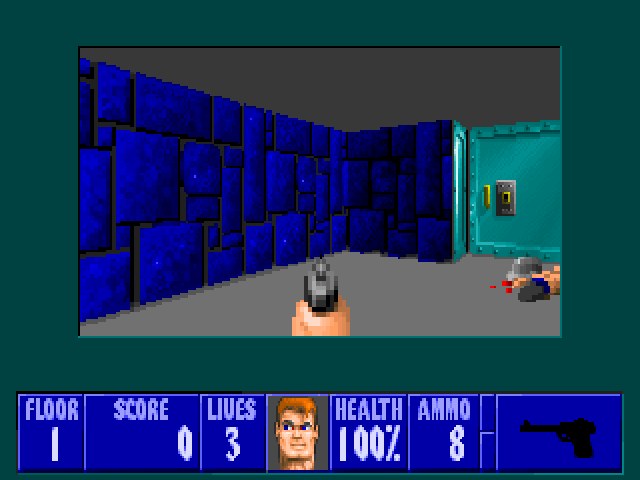
Wolfenstein 3D also had a second life that nobody planned. It wasn’t designed to be modified, but players built their own level and character editors anyway, and Apogee later even released a pack of over 800 fan-made levels. That was a sign of things to come.


DOOM (1993): the game that ate the world
If Wolfenstein lit the match, DOOM was the explosion. At midnight on December 10, 1993, after about 30 straight hours of testing, the team at id uploaded the first episode to the internet and let players spread it themselves.
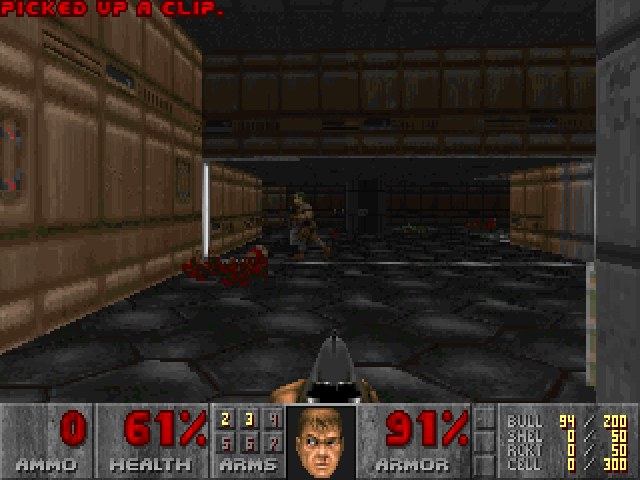
You’re a space marine (fans later started calling him Doomguy) fighting demons on the moons of Mars and, eventually, in Hell. Compared to Wolfenstein, DOOM had stairs, lifts, different heights, flickering lights and dark rooms. The monsters were still flat pictures in a 3D world, which is why people sometimes call it “2.5D,” but in 1993 nobody cared. It looked amazing.
Two things made DOOM bigger than just a great game.
Deathmatch. DOOM was the first game to coin the term “deathmatch.” Romero has said the idea was inspired by fighting games like Street Fighter II. Hooking up two or four PCs and hunting your friends was a whole new kind of fun, and “fragging” became part of the vocabulary.
WAD files. DOOM kept its levels and graphics in separate files called WADs (short for “Where’s All the Data?”). Carmack had been impressed by what fans did to Wolfenstein and designed DOOM so its data was easy to swap out. Fans figured out the rest, and a flood of custom levels and mods followed. That modding culture, which basically every PC game community still has, comes straight from here.
DOOM sold an estimated 3.5 million copies by 1999, and that doesn’t count all the people who only ever played the free shareware episode. A retail version with a fourth episode came out in 1995 as The Ultimate Doom.
Rise of the Triad (1994-1995): Apogee’s wild one
Rise of the Triad started life as a follow-up to Wolfenstein 3D, then turned into its own game. Apogee released the shareware version, Rise of the Triad: The Hunt Begins, in 1994, and the full game, Rise of the Triad: Dark War, in 1995.
It ran on a modified version of the Wolfenstein 3D engine, but Apogee pushed that engine further than anybody expected, adding elevation, dynamic lighting and levels stacked on top of each other. You picked one of five members of a special forces team sent to stop a cult on an island off the coast of Los Angeles, and each character had different health, speed and accuracy.
What I remember most is how over-the-top it was. Rockets everywhere, jump pads that launched you across the room, and a sense of humor that didn’t take itself seriously at all. It never got the fame of DOOM, but if you played it, you remember it. And it’s had a second life too: a remake came out in 2013, and a remaster called Rise of the Triad: Ludicrous Edition came out in 2023.
Duke Nukem 3D (1996): the shooter with a personality
Duke Nukem had already starred in two side-scrolling games from Apogee. In 1996, Duke went 3D, released under Apogee’s new 3D Realms name. The shareware version came out on January 29, 1996, and the full game followed on April 19, 1996.
Duke Nukem 3D felt different from DOOM because the world felt like a real place. You could flip light switches, break things, use toilets and play pool. Levels were set in places you recognized, like city streets, movie theaters and strip clubs, instead of abstract bases. And Duke talked, voiced by Jon St. John, with one-liners lifted from every action movie of the ’80s.
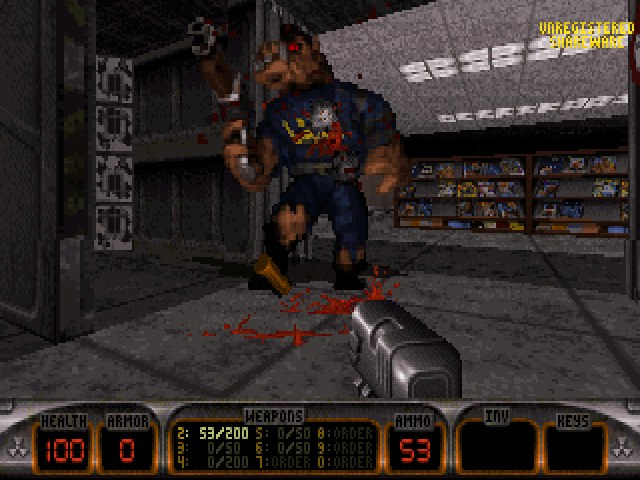
It was also controversial for its violence and its adult content, which, let’s be honest, is part of why every teenager I knew wanted it. Reviewers loved it anyway, for its interactive environments and level design, and it’s still considered one of the games that made the first-person shooter popular, alongside Wolfenstein 3D, DOOM and Quake. An expansion, the Plutonium PAK, came out later in 1996, and the Atomic Edition bundled it all together that December.
Quake (1996): real 3D and the internet
id’s follow-up to DOOM, Quake, came out in 1996. Where DOOM faked its 3D, Quake’s engine rendered everything in real-time 3D, monsters included, and it had early support for 3D accelerator cards. If you saw Quake running on a machine with one of those cards, it was jaw-dropping.
The setting is a strange mix of military bases and gothic castles, inspired partly by H.P. Lovecraft and partly by a Dungeons & Dragons campaign the id staff had played. The music was by Trent Reznor and Nine Inch Nails.
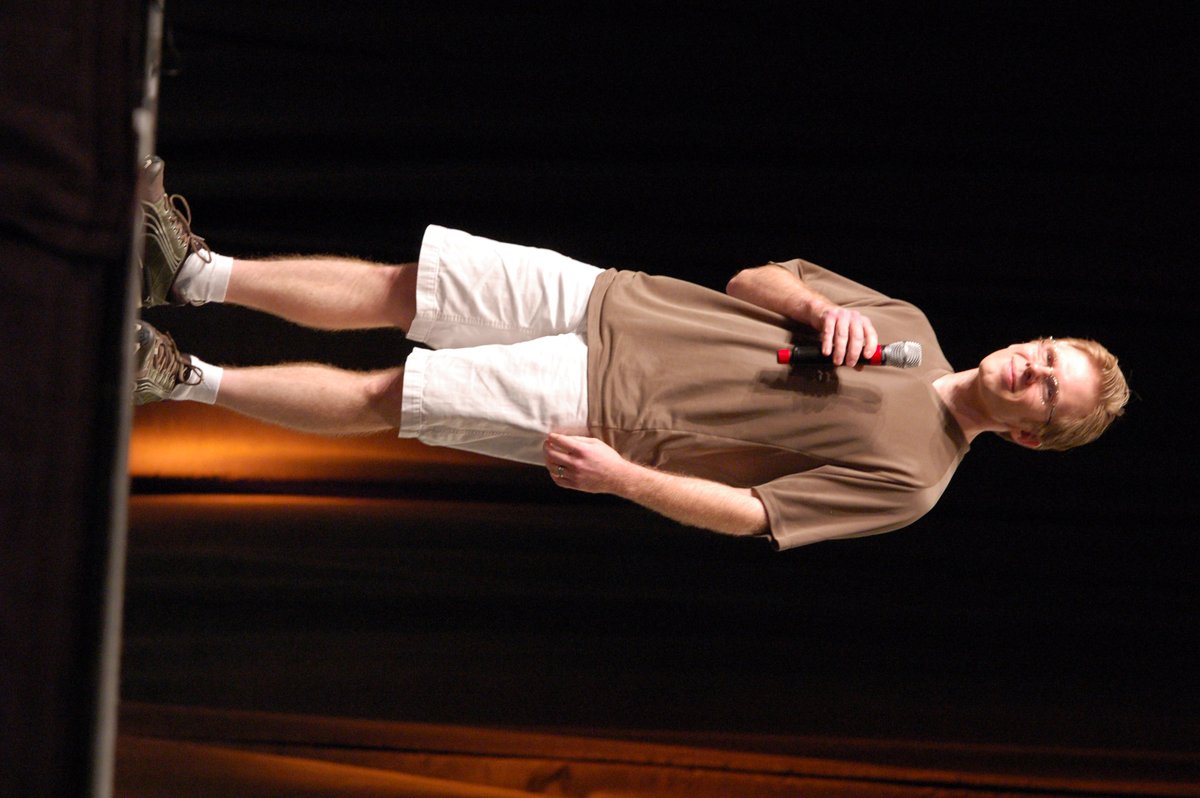
The biggest deal, though, was online play. Quake supported playing over the internet, and id followed it with QuakeWorld, which added a technique called client-side prediction to make online play feel smoother on slow connections. That technique became standard in almost every online game since.

Command & Conquer (1995): Westwood invents the modern RTS
Now we get to my favorite part of the decade.
Westwood Studios, out of Las Vegas, had already made Dune II, the game most people point to as the first modern real-time strategy game. Westwood’s next strategy game was supposed to move on from Dune, and in 1995 it shipped Command & Conquer (fans later called it Tiberian Dawn to tell it apart from the sequels).
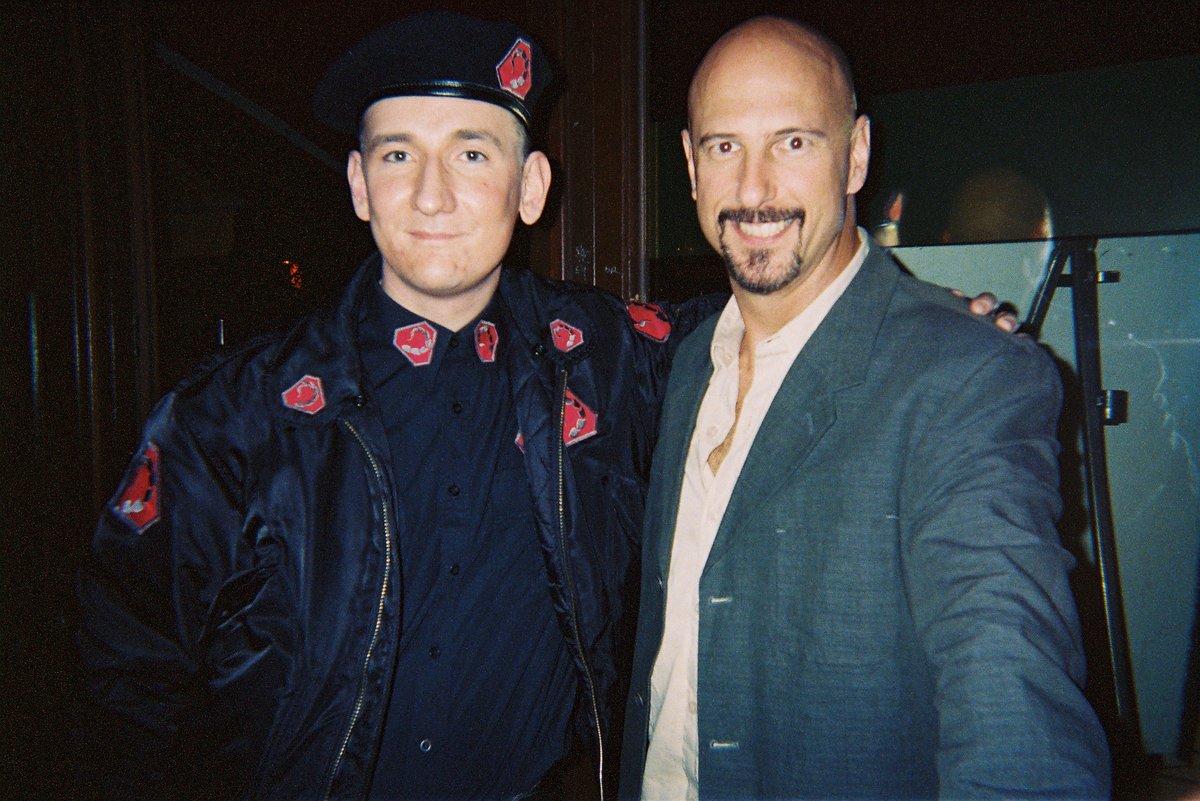
The setup: a strange substance called Tiberium spreads across the Earth, and a war breaks out between the Global Defense Initiative (GDI), backed by the United Nations, and the Brotherhood of Nod, a cult-like army led by the bald, intense Kane. You harvest Tiberium for money, build a base, crank out tanks and infantry, and try to wipe out the other side, all in real time.
What made C&C feel like an event were the live-action videos between missions. Actual people, mostly Westwood employees plus a few professional actors, giving you briefings and taunting you. Joseph D. Kucan, who played Kane, became the face of the whole series. The Gulf War was fresh in everyone’s mind, and the game’s modern-warfare look and TV-news style briefings fit the moment perfectly.
It was a huge hit, selling over three million copies, and it’s widely credited as the game that defined and popularized real-time strategy. It also came on two CDs, one for each side, which meant you and a buddy could play against each other with one copy. Westwood knew exactly what it was doing.

Red Alert (1996): the best game ever made (I’m not arguing about this)
Command & Conquer: Red Alert came out in 1996, and it’s my favorite game of all time. I still play it. That’s not nostalgia talking, or not only nostalgia. It just holds up.
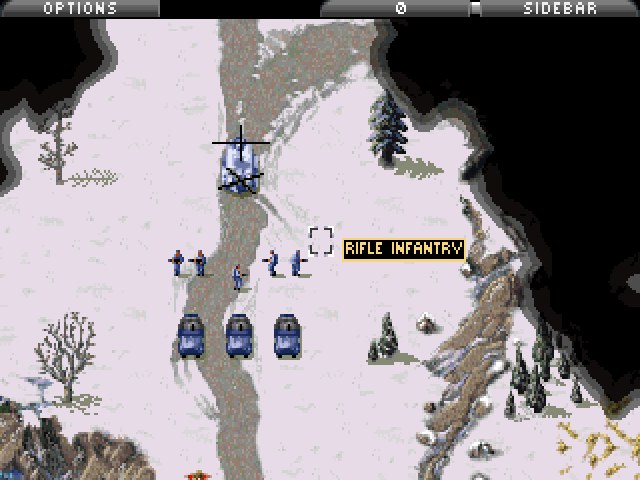
Red Alert is a prequel to the original C&C, set in an alternate history where the Allies fight an aggressive Soviet Union for control of Europe. It shipped with both DOS and Windows 95 versions in the same box, and it came on two discs, Allied and Soviet, so once again a pair of friends could share a copy for multiplayer.
Here’s what made it special for me:
- The two sides really played differently. The Allies had faster, lighter units and tricks like spies and the Chronosphere. The Soviets had heavy tanks, Tesla coils and the Iron Curtain. Learning to beat each one with the other was the whole game.
- Naval battles. Destroyers, submarines and gunboats added a whole extra layer to maps with water.
- The videos. The cheesy-but-awesome live-action briefings were back, and the alternate-history story was just fun.
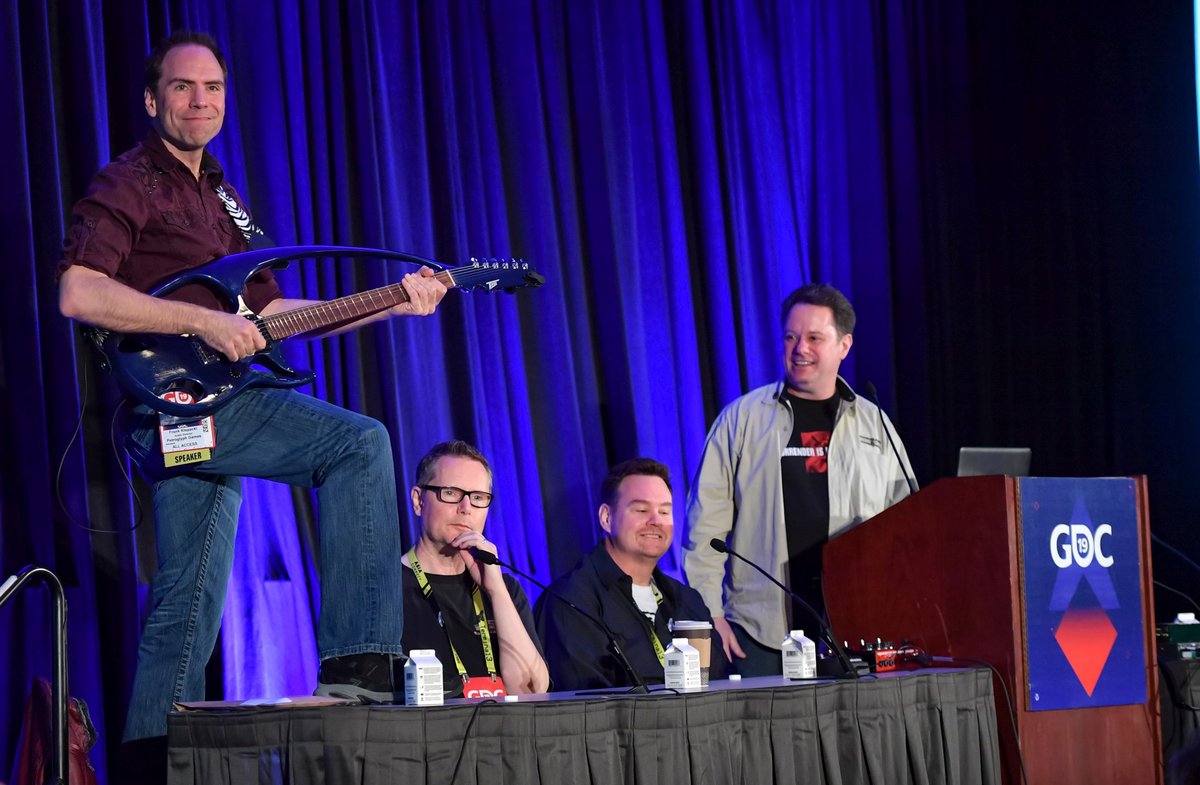
- The music. Frank Klepacki’s score, especially “Hell March,” with its marching boots, guitar riffs and chanting, is one of the most recognizable pieces of game music ever. PC Gamer voted the soundtrack the best of 1996.
- Multiplayer. Over a LAN, a modem or the internet, Red Alert was the game we played until the sun came up.
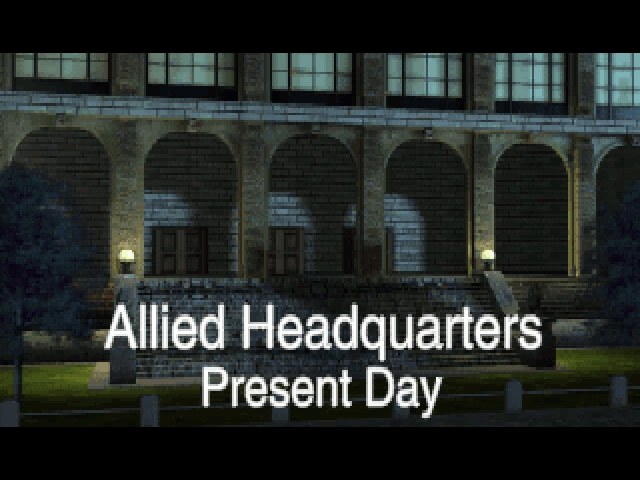
Two expansions followed, Counterstrike and The Aftermath, and the PlayStation got a version called Retaliation that bundled their missions with some new video scenes. Red Alert is still widely ranked among the greatest games ever made.

How to play Red Alert free today
This is the best part. You don’t need your old CDs.
On August 31, 2008, to mark the series’ anniversary and promote Red Alert 3, Electronic Arts (which bought Westwood in 1998) released the original Red Alert as freeware. EA had already done the same for the original Command & Conquer in 2007, and it did it for Tiberian Sun on February 12, 2010.
The easiest way to get it now is CnCNet, a community project that has been keeping classic C&C games playable since 2009. CnCNet offers free downloads of Command & Conquer, Red Alert and Tiberian Sun, patched to run on modern Windows, with the original campaigns and online multiplayer. It also runs online play for Red Alert 2, Yuri’s Revenge and Dune 2000 (you need your own copy of those).
The other option is OpenRA, a free, open-source project that rebuilds Red Alert, Command & Conquer and Dune 2000 from the ground up. It runs natively on Windows, macOS and Linux, and it adds modern touches like attack-move and unit veterancy, plus online play, custom maps and updated campaigns. It plays a little differently from the 1996 original, so purists may prefer CnCNet, but it’s a great way in.
And if you want to spend a few bucks, the Command & Conquer Remastered Collection, released June 5, 2020, on Steam, rebuilds the original C&C and Red Alert with 4K graphics, remastered music and all the expansions.
The rest of the Command & Conquer family
Red Alert is the king, but the rest of the series deserves a lap:
- Tiberian Sun (1999) picked the GDI-versus-Nod story back up in the year 2030, with a darker sci-fi look, a new engine with varied terrain, and big-name actors like James Earl Jones and Michael Biehn in the videos. Its expansion was Firestorm.
- Red Alert 2 (2000) and its expansion Yuri’s Revenge went fully goofy in the best way, with mind control, giant squid and Soviets invading America. Yuri’s Revenge is the best-reviewed expansion in the series, and plenty of people rank RA2 right up there with the original.
- Renegade (2002) was a first-person shooter set during the first game’s war. Reviews were average, but its online mode was a lot of fun. It was the last C&C game Westwood made before EA closed the studio in 2003.
- Generals (2003) and its expansion Zero Hour left the Tiberium and Red Alert stories behind for a near-future war between the United States, China and a fictional terrorist group. It was the first fully 3D C&C strategy game.
- Command & Conquer 3: Tiberium Wars (2007) brought Kane back, added an alien third faction called the Scrin, and got the expansion Kane’s Wrath.
- Red Alert 3 (2008) added a third faction, the Empire of the Rising Sun, and was the first RTS to let you play the campaign co-op online.
- Command & Conquer 4: Tiberian Twilight (2010) wrapped up the Tiberium story, but most fans didn’t like how far it moved away from classic base-building.
The series as a whole had sold 30 million copies by 2009.

Warcraft II and StarCraft: Blizzard joins the fight
C&C had real competition, and it came from Blizzard. Warcraft II: Tides of Darkness came out in North America on December 5, 1995, and won most of the big PC gaming awards in 1996. Orcs versus humans, ships on the water, fog of war hiding the map. Its expansion, Beyond the Dark Portal, came out in 1996.
Then on March 31, 1998, Blizzard released StarCraft, with three races that played completely differently: the human Terrans, the insect-like Zerg and the psychic Protoss. It was the best-selling PC game of 1998, and it got so big in South Korea that it turned into one of the first real esports, with pro players and televised tournaments.
The Red Alert versus Warcraft II argument was a real thing at my school. I know which side I was on.
Diablo: one more dungeon level
Blizzard’s Diablo started shipping to stores in late December 1996 and was widely available by early January 1997. You pick a warrior, rogue or sorcerer and head down through 16 randomly generated dungeon levels under the town of Tristram, all the way to Hell. Because the levels and loot changed each time, it was dangerous to start a game after dinner on a school night. It also came with Blizzard’s free Battle.net online service, which made playing with strangers over the internet easy for the first time for a lot of people.
Myst, SimCity 2000 and the CD-ROM revolution
Not every big game of the ’90s was about blowing things up.
Myst came out for the Mac on September 24, 1993 (the PC version followed). You arrive on a quiet island and figure it out by clicking around beautiful pre-rendered pictures and solving puzzles. No enemies, no timer, barely any instructions. It sold more than six million copies and was the best-selling PC game for nearly a decade. It’s also often credited with helping sell CD-ROM drives, since there was no way all those images would have fit on floppies.
SimCity 2000, from Will Wright and Fred Haslam at Maxis, also came out in 1993. It took the original SimCity and tilted it into a gorgeous isometric view, with water pipes, subways, newspapers and, of course, disasters you could turn on just to watch. It sold about 4.23 million copies.
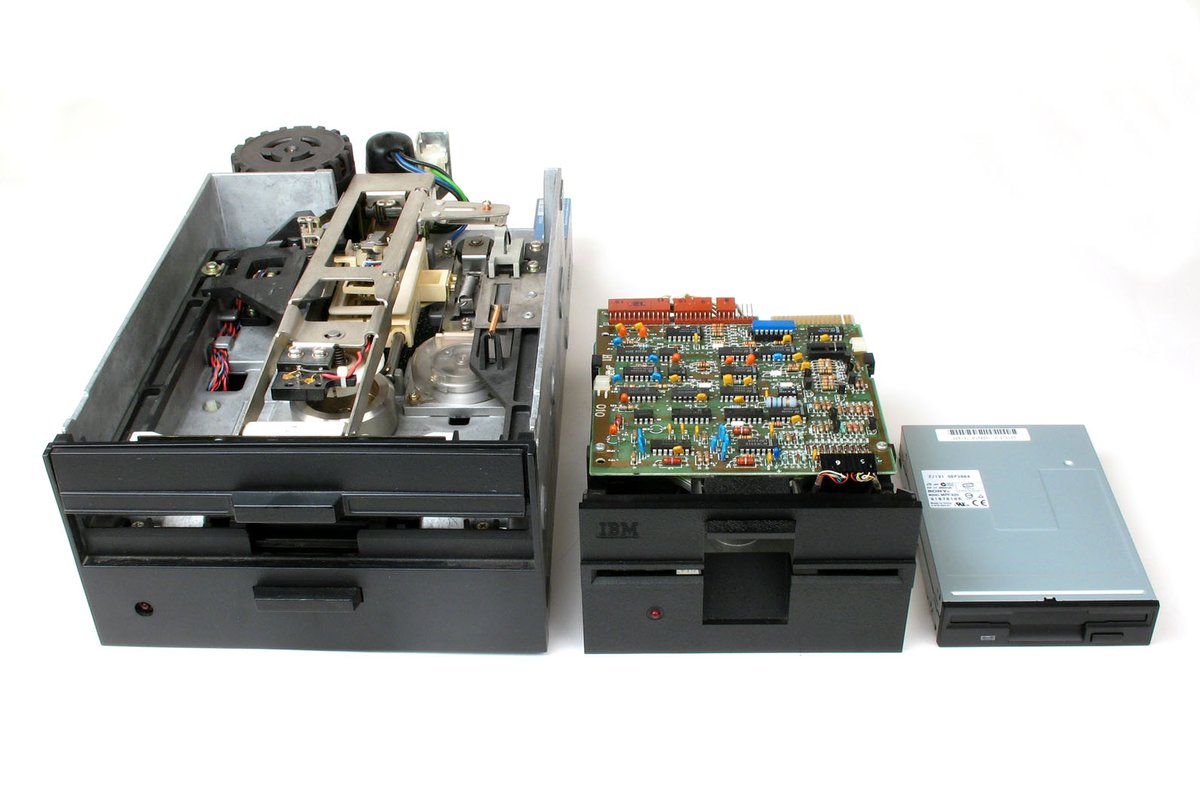
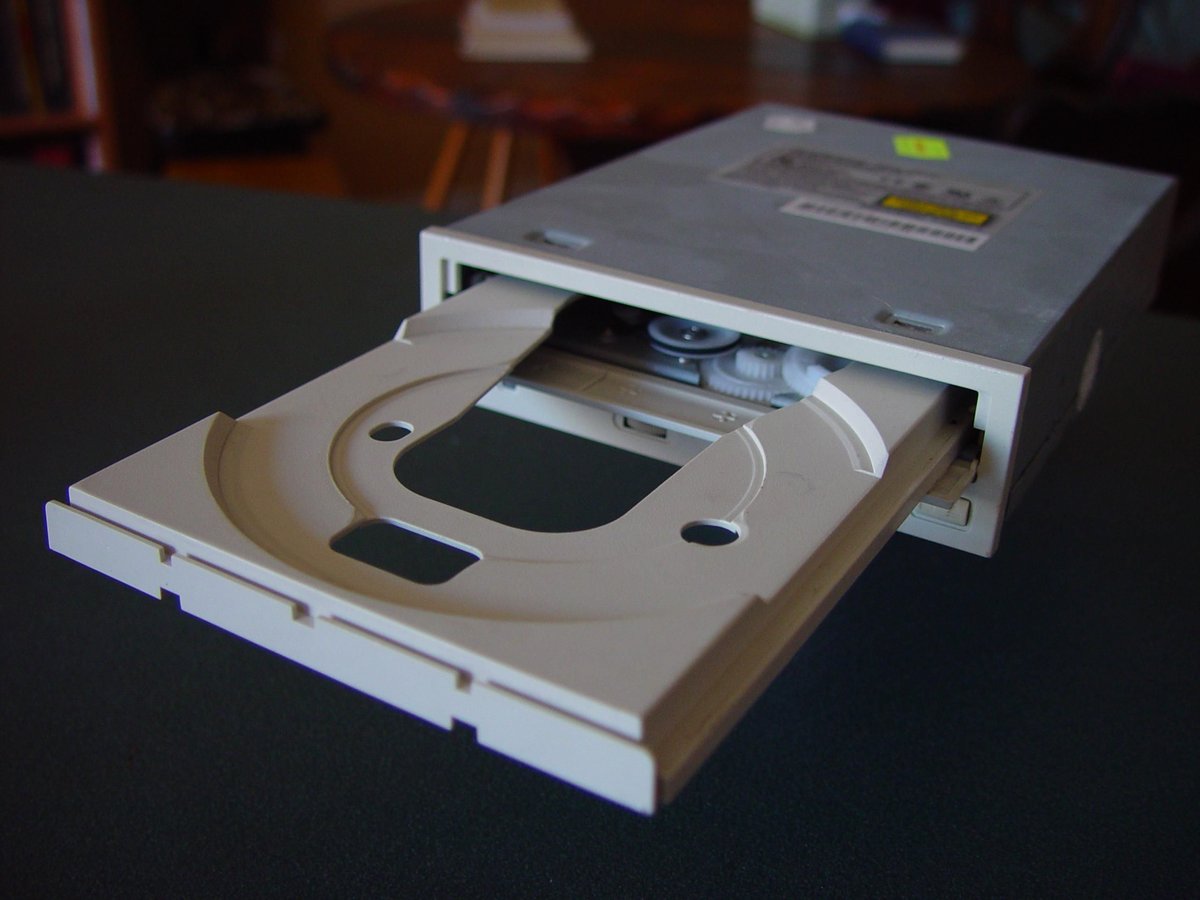
The CD-ROM itself was a huge deal. A floppy held about 1.44 MB, and a CD held around 650 MB, hundreds of times more. That’s what made room for C&C’s videos, Myst’s pictures and real recorded music. A double-speed CD-ROM drive was a big upgrade around 1993 or 1994, and by the end of the decade it was hard to buy a PC without one.

School computers: The Oregon Trail
For a lot of us, the first computer game we ever played was at school. The Oregon Trail goes all the way back to a text game written in 1971, but the version most people remember is the graphical one MECC released in 1985 for the Apple II, followed by DOS (1990), Mac (1991) and Windows (1993) versions. You lead a wagon party from Independence, Missouri, to Oregon’s Willamette Valley in 1848, buy supplies, ford rivers, hunt, and watch your party come down with dysentery. Everybody died of dysentery. It’s a rite of passage.
LucasArts and Sierra: the adventure game years
Point-and-click adventure games were huge in the early ’90s, and two companies ruled them.
From Lucasfilm Games (later LucasArts) came The Secret of Monkey Island (1990), designed by Ron Gilbert with Tim Schafer and Dave Grossman. You play Guybrush Threepwood, a young man who wants to be a pirate. Gilbert designed it so you could almost never die, which meant you could explore and goof around without fear. It’s still one of the funniest games ever written. Insult sword fighting alone is worth the price.
And from Sierra On-Line came King’s Quest, Space Quest, Police Quest and the one every kid wanted to play but wasn’t supposed to: Leisure Suit Larry.
Leisure Suit Larry and the “are you an adult?” quiz
Leisure Suit Larry in the Land of the Lounge Lizards came out from Sierra in 1987, written by Al Lowe, and it ran on the floppy-disk PCs a lot of us had in the house. It’s an adults-only comedy about Larry Laffer, a hopeless guy in a leisure suit trying to find love in the fake city of “Lost Wages.” It was a sleeper hit, even with almost no advertising, and spawned a long series of sequels. Sierra remade the first game in 1991 with 256-color graphics and a point-and-click interface.
Here’s the part every ’90s kid remembers. Because it was for adults, the game started with an age-verification quiz: a set of trivia questions that Al Lowe figured kids wouldn’t know the answers to. The way I remember it, they were things like what year we landed on the moon, or who was president in a certain year. Stuff any grown-up knew off the top of their head.
And he was right, we didn’t know the answers. So what did we do? We walked into the kitchen and asked Mom or Dad. And they’d happily answer, because they figured it was homework. Lol. I can’t be the only one who did that. Then you’d run back to the computer and type in the answer before anybody wondered why your “homework” had a guy in a white leisure suit on the screen.
The funny part is, there were only about a dozen questions in the pool, so they kept coming back around. Once you’d asked your parents a few times, you knew all the answers for good, and you never had to ask again.
(The game was honestly pretty tame by today’s standards, mostly double meanings and jokes. But as a kid, getting past that quiz felt like cracking a safe.)


Half-Life (1998): the decade’s big finish
Valve’s first game, Half-Life, came out on November 19, 1998, published by Sierra. You play Gordon Freeman, a physicist trying to escape the Black Mesa Research Facility after an experiment goes horribly wrong. The engine was a heavily modified version of the Quake engine, but what made it special was the storytelling. There were almost no cutscenes. The story happened around you while you kept control, through scripted scenes on the tram ride in and everything after.
It won more than 50 Game of the Year awards and had sold more than nine million copies by 2008. And because it was so easy to mod, it spawned a pile of fan-made mods. The most famous one, Counter-Strike, turned into a giant on its own and took over the LAN parties of the early 2000s.
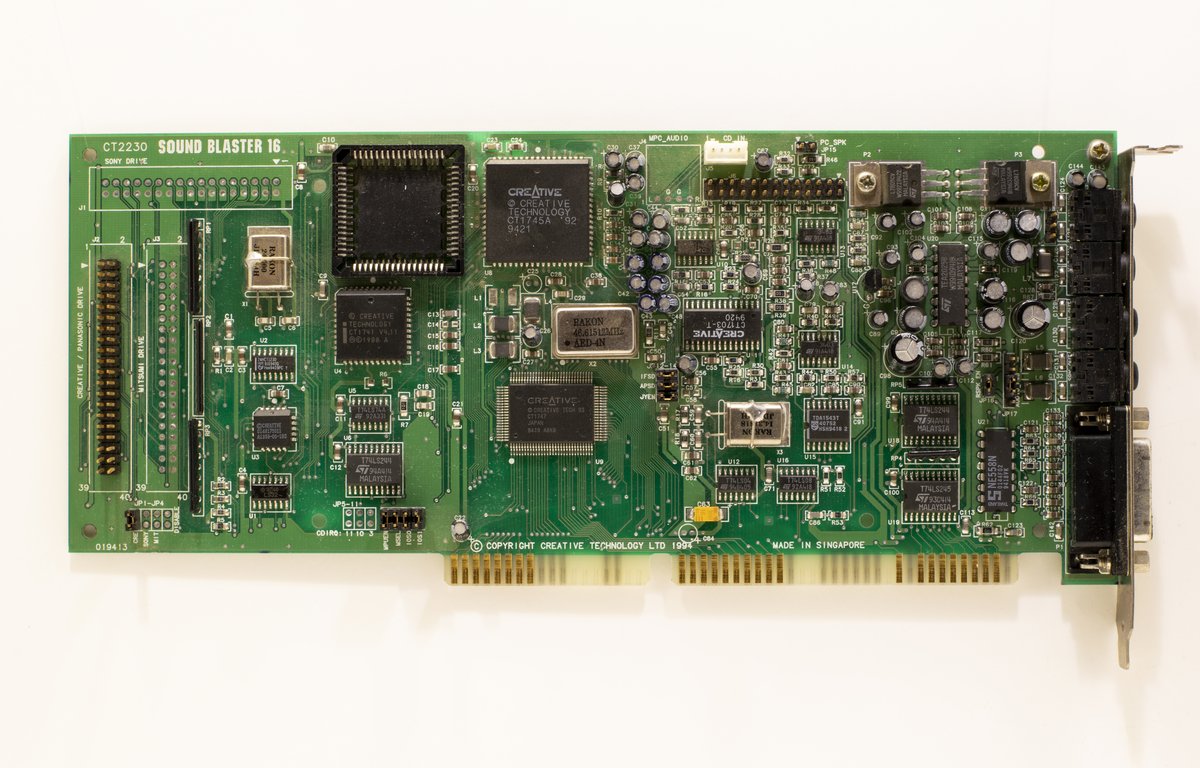
Sound Blaster: when games learned to talk
Early PCs only had a little internal speaker that could beep. That’s it. Games did their best with it, but if you wanted real music and sound effects, you needed a sound card, and the name everyone knew was Sound Blaster.
Creative Labs introduced the first Sound Blaster in 1989. Through the early ’90s, Sound Blaster cards were the standard for PC audio. Games had a setup screen where you’d pick your sound card, and “Sound Blaster or 100% compatible” was the safe answer. By 1995, Creative had sold more than 15 million Sound Blaster cards, about seven out of every ten sound cards sold. The Sound Blaster 16 came with the slogan “Get Real.” Windows 95 eventually standardized sound for games, and sound got built into motherboards, so the cards mattered less over time.
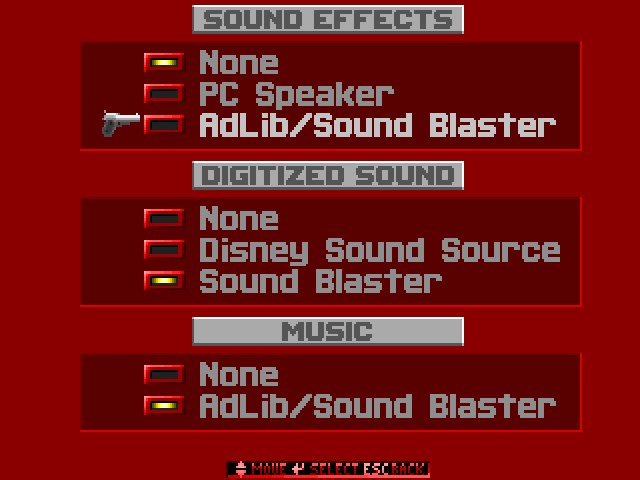
Oh, and then you had to know your card’s settings. Remember typing in things like the IRQ and DMA numbers, and “Address 220”? If you got those wrong, the game played in silence, or locked up. Which brings us to…
DOS memory tweaks and the boot disk
Every ’90s PC gamer learned a little bit of system administration whether they wanted to or not.
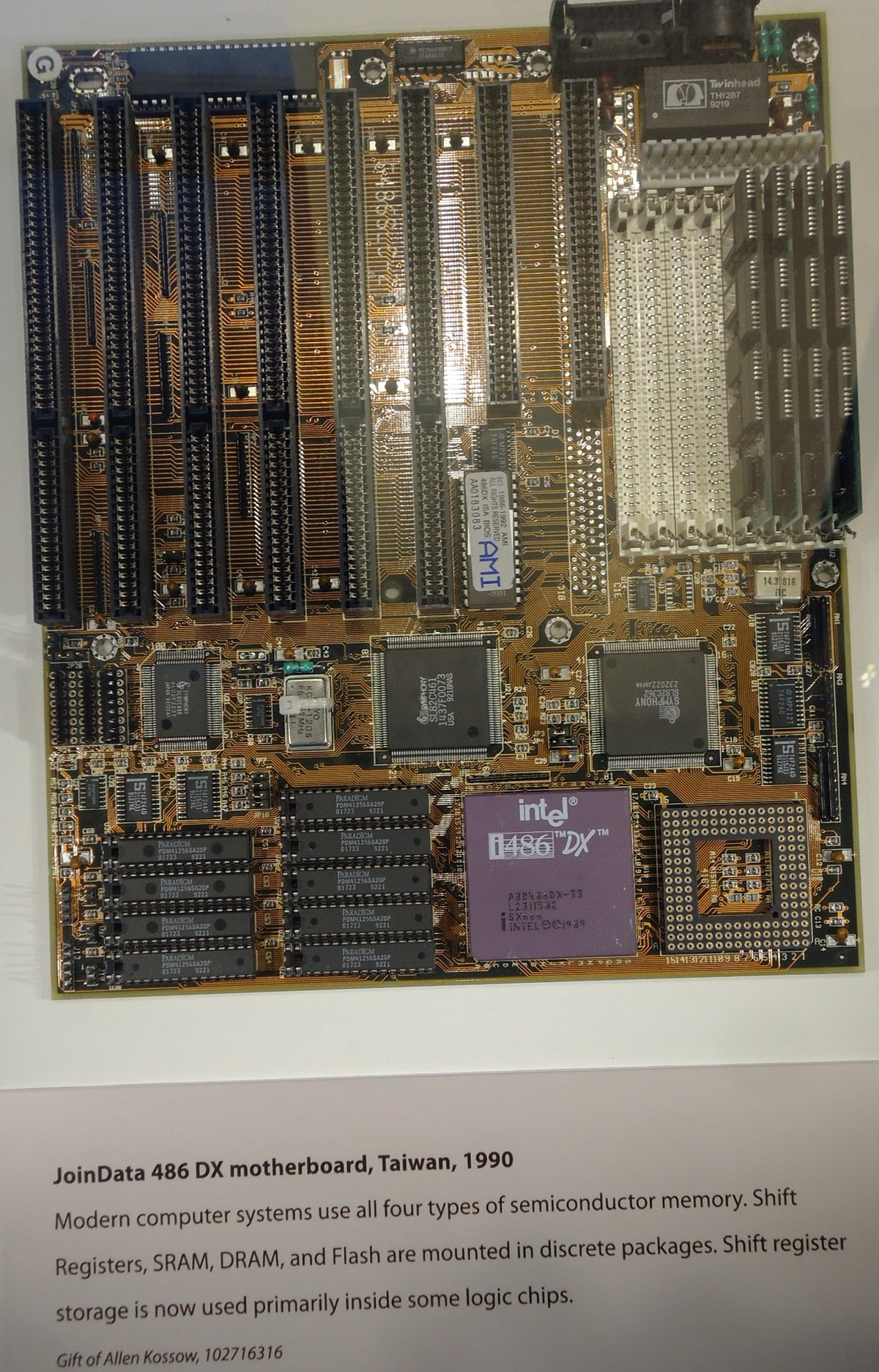
DOS had a famous limit: programs ran in the first 640 KB of memory, called conventional memory, no matter how much RAM your computer actually had. Your mouse driver, CD-ROM driver and sound drivers all wanted a piece of that 640 KB too. So a big game would refuse to start and tell you it needed, say, 580 KB free, and you’d only have 540.
So you learned to edit two files, CONFIG.SYS and AUTOEXEC.BAT. You’d load HIMEM.SYS and EMM386, add “DOS=HIGH,UMB,” and use LOADHIGH or DEVICEHIGH to shove drivers out of the way into upper memory. You’d run MEMMAKER and hope. A lot of people kept a separate boot floppy just for games, with only the drivers that game needed, so they could restart and get every last kilobyte back.
Later games got around this with “DOS extenders” (you might remember DOS/4GW flashing on the screen as DOOM and plenty of others started), which let them use all your extended memory. But for a few years there, getting a new game to run was its own puzzle game.

LAN parties: hauling a CRT to a buddy’s house
Online play existed, but on dial-up it was laggy and tied up the phone. The real way to play multiplayer was to put the computers in the same room.
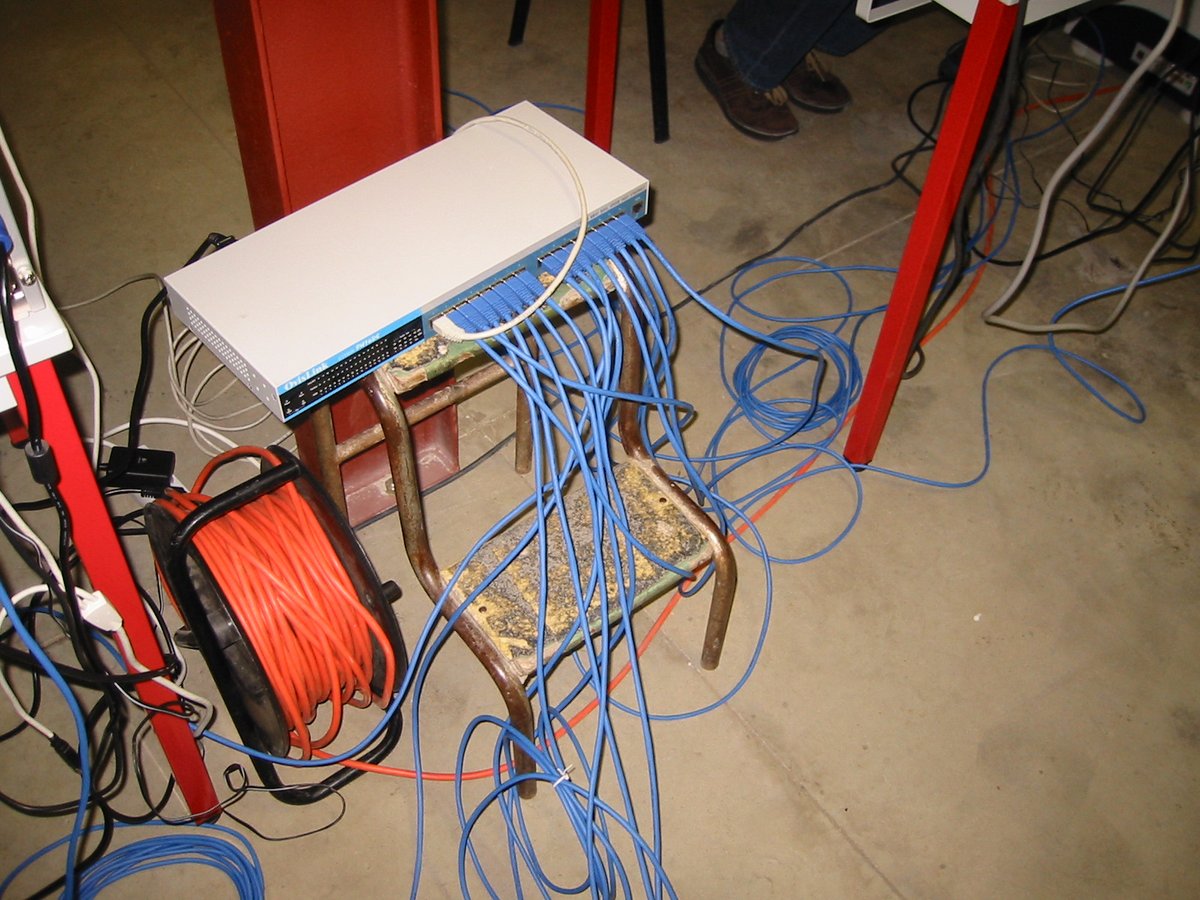
A LAN party meant everybody loading up their full desktop, a huge CRT monitor, keyboard, mouse and a tangle of cables, and driving to somebody’s house. Somebody had a hub, somebody had extra network cables, and everybody spent the first hour getting the network working and installing the same version of the game. Then you played Red Alert, DOOM, Duke 3D, Quake, StarCraft or Warcraft II all night, fueled by pizza and soda.
Private LAN parties peaked in the late ’90s and early 2000s, when broadband was either unavailable or too expensive for most people, and they faded in the 2010s as online gaming got fast enough that nobody had to carry a monitor anywhere. Some still happen, and the big ones are huge: DreamHack in Sweden holds the world record at 22,810 visitors.

Why it all still holds up
When I look back at the ’90s, what gets me is how much of what we take for granted started in that one decade. First-person shooters, deathmatch, modding, real-time strategy, online play, esports and story-driven games all either started or took off between Wolfenstein 3D in 1992 and Half-Life in 1998. Most of it was made by small teams who were figuring it out as they went.
And a lot of it is still playable. Fire up CnCNet or OpenRA and play a round of Red Alert, and you’ll see what I mean. Build your ore refinery, send out the harvesters, and when “Hell March” kicks in, tell me that’s not the best game ever made.
From https://www.djgaston.com/90s-pc-games/ · Updated October 22, 2026