A good campfire is half the reason to go camping. Doing it right means the woods are still there next time.
Quick answer Check fire restrictions first. Use an existing fire ring if there is one, at least 15 feet from tents and brush, with a 10-foot cleared circle. Light dry tinder, add kindling, then logs. Keep it small. To put it out: drown, stir, drown again, and feel. If it’s too hot to touch, it’s too hot to leave.
Tools & materials
- Bucket of water and a shovel (have them ready before you light)
- Tinder: dry leaves, grass, pine needles, small twigs
- Kindling: sticks smaller than about 1 inch around
- Firewood: larger dry pieces
- Matches or a lighter
- A phone, in case you need to call 911
Steps
- Check the rules. Search “fire restrictions” plus your county or park, or call the campground. Don’t build a fire where it’s banned, or when it’s dry or windy.
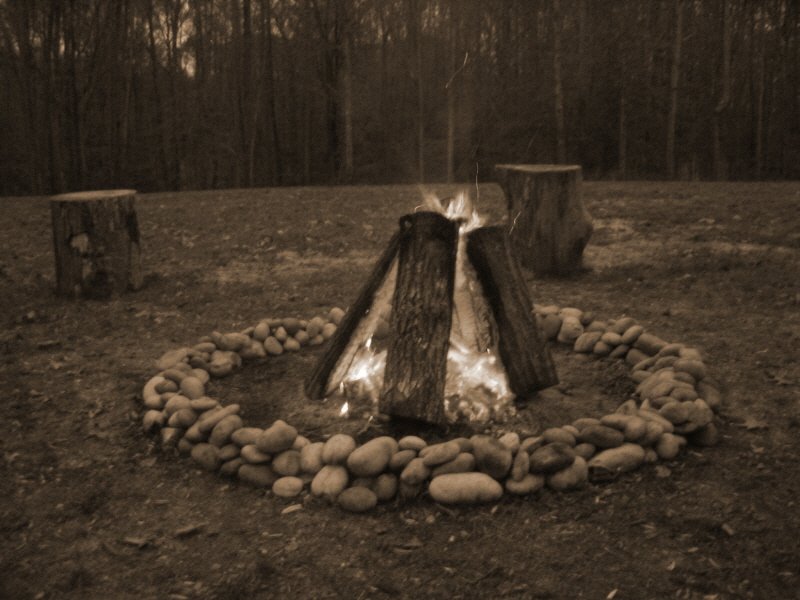
- Pick the spot. Use an existing fire ring or rock circle if there is one. Otherwise choose a flat, open spot out of the wind, at least 15 feet from tents, brush and low branches, with open sky overhead (at least three times the height of the flames).
- Prep the pit. Clear a circle at least 10 feet across down to bare ground. With no ring, dig a pit about a foot deep and circle it with rocks.
- Gather wood. Pick up dead, dry sticks and wood off the ground. Don’t cut live trees or branches; green wood won’t burn anyway.
- Build it. Pile tinder in the center. For cooking, lean kindling over it like a teepee or a lean-to. For a longer-lasting fire, stack kindling around it log-cabin style or crisscross it on top.
- Light it. Light the tinder with a match or lighter. Never use gasoline or other flammable liquids. Blow gently at the base, then add kindling and larger pieces a little at a time.
- Tend it. Keep it small. Somebody watches it the whole time, and kids and dogs stay back. Don’t burn trash, cans, glass, batteries or aerosol cans.
- Put it out: drown. Pour lots of water on it until the hissing stops. Don’t just cover it with dirt or sand.
- Stir. Stir the ashes and embers with the shovel, and scrape partly burned sticks and logs.
- Drown again, then feel. Add more water and keep stirring until everything is cool. Hold the back of your hand close over the ashes. If you feel any heat, keep going.
Safety: If the fire gets out of the pit or embers land in the grass, call 911 right away. Never leave a fire unattended, not even for a few minutes.
Good to know
Abandoned or poorly put-out campfires are a major cause of wildfires. Pack out everything you brought in and leave the site as good as you found it, or better.