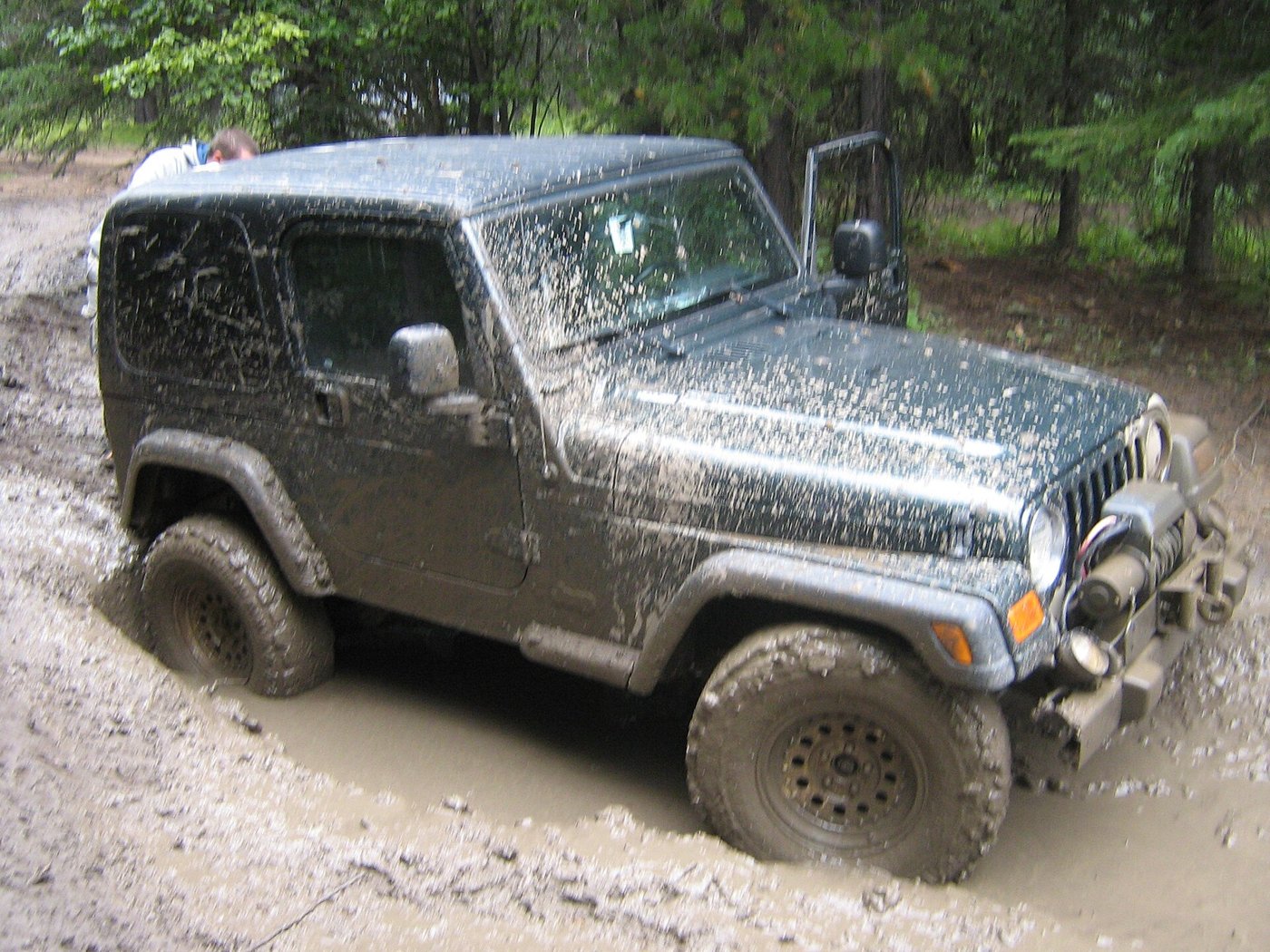
If you go off-road long enough, you’re going to get stuck. Getting unstuck without anybody getting hurt is the part that matters.
Quick answer Hook a stretchy recovery (snatch) strap to rated recovery points on both trucks, never to a hitch ball, tie-down or bumper, and never use a chain for a snatch. Drape a damper or heavy blanket over the middle of the strap, get everyone out and well back (at least 1.5 times the strap’s length, and never in line with it), agree on signals, then have the recovery truck take up the slack gently.
Tools & materials
- Recovery strap rated for your trucks (not a tow strap)
- Soft shackles or rated bow shackles
- Recovery damper, heavy bag or blanket
- Shovel
- Gloves
- Your owner’s manual (to find the recovery points)
Steps
- Stop and look. Figure out what’s holding you and where solid ground is. If it’s beyond your gear or skill, call a professional; that’s cheaper than an injury.
- Find rated recovery points. Check your owner’s manual for where your truck’s recovery points are, on both trucks. Tie-down loops, trailer hitch balls, bumpers and suspension parts are not recovery points. Hitch balls aren’t made for these loads and can snap off and fly like a bullet.
- Use the right strap. A recovery (snatch) strap stretches and stores energy, which eases the shock on both trucks. A tow strap or chain doesn’t stretch, so it shock-loads everything and can break something. Use a recovery strap with a minimum breaking strength of about two to three times the gross vehicle weight of the lighter truck. Never use a recovery strap for ordinary towing.
- Inspect it. Don’t use a strap that’s cut, frayed or damaged. A soaking-wet strap is weaker and stretches less.
- Connect it. Use a soft shackle or a load-rated bow shackle at each end. Soft shackles have no metal pin to turn into a projectile. If using a steel shackle, tighten the pin until it seats, then back it off about half a turn. Never join two straps with a shackle; if one breaks, the shackle becomes a missile.
- Line up. Put the recovery truck as straight in line with the stuck truck as possible, with the strap untwisted and a few feet of slack.
- Dampen it. Drape a recovery damper, heavy bag or blanket over the middle of the strap to knock it down if something lets go.
- Clear the area. Passengers out. Everyone stands at least 1.5 times the strap’s unstretched length away, and never in line with the strap or in the path of either truck.
- Agree on signals. Both drivers know who goes when, which way, and when to stop.
- Pull. The recovery truck eases forward to take up the slack and keeps going, letting the strap’s stretch do the work. The stuck truck drives gently at the same time. If it doesn’t come out, try again with a little more speed, not a lot. Avoid repeated hard jerks.
Safety: Recovery straps have killed people when hardware or recovery points let go. Rated points only, never a hitch ball or tie-down, never a chain for snatching, damper on, everybody well back.