With boys running around outside, knowing which snakes to leave alone is just part of living in Arkansas.
Quick answer Arkansas has six venomous snakes: copperhead, cottonmouth, timber rattlesnake, western pigmy rattlesnake, western diamondback rattlesnake and the rare Texas coral snake. Give every snake room and don’t handle it. If someone is bitten, call 911 or get to a hospital fast. No cutting, sucking, tourniquets or ice.

What helps
- Boots and long pants in brush and tall grass
- Leather gloves for moving brush, rocks or wood piles
- A flashlight at night
- A phone for a photo (from a safe distance) and to call for help
Know them, avoid them, and what to do after a bite
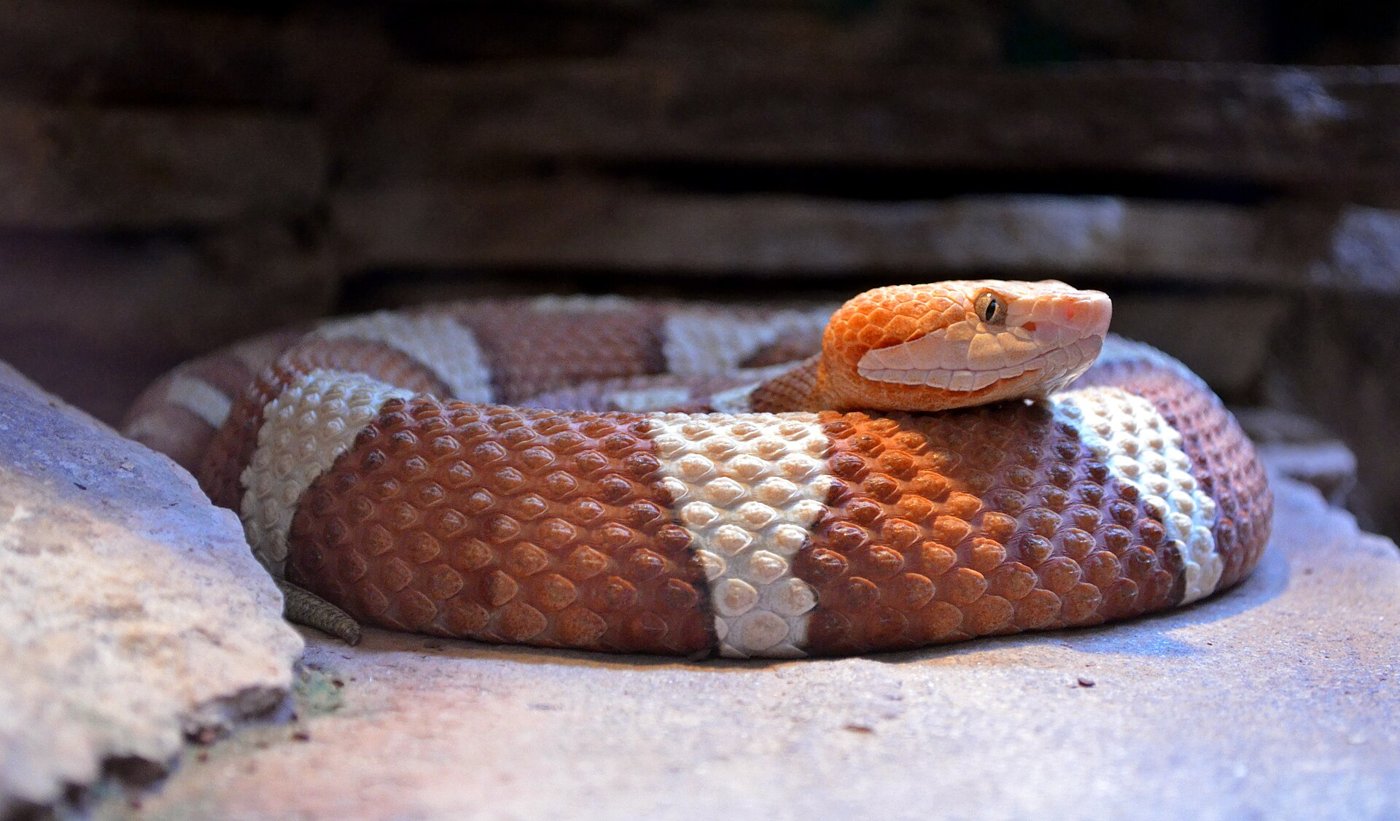
- Copperhead (statewide). Tan to coppery with darker brown hourglass bands. From the side, the half-hourglass looks like a Hershey’s Kiss. Adults are about 1.5 to 3 feet. Young ones have a bright yellow tail tip. Great camouflage in leaf litter, so watch where you step and reach.
- Cottonmouth, or water moccasin (statewide, near water). Thick-bodied, dark brown to nearly black as an adult, with a dark stripe through the eye. When bothered it may gape and show the white inside of its mouth. Young ones are boldly banded with a yellowish-green tail.
- Timber rattlesnake (statewide). Gray, yellowish or light brown with dark, jagged crossbands, often a rust-colored stripe down the back, and a solid dark “velvet” tail ending in a rattle.
- Western pigmy rattlesnake (statewide). Small and gray with black blotches and a rust-colored stripe down the back. The rattle is tiny and can be hard to hear.
- Western diamondback (west-central Arkansas). Brown and tan diamond-shaped blotches and a black-and-white banded “coon tail” before the rattle. Found on rocky, open hillsides.
- Texas coral snake (rare, southwest Arkansas). Red, yellow and black bands that go all the way around, with red touching yellow and a black snout. Some harmless snakes, like milk snakes, have red, black and yellow bands too, so look but don’t touch.
- Don’t rely on eye shape. Coral snakes have round pupils. And if you’re close enough to see a snake’s pupils, you’re too close.
- Avoid bites. Snakes are most active at dawn and dusk and in warm weather. Stay out of tall grass and leaf piles when you can, and don’t reach into wood piles or under rocks with bare hands. Rattlesnakes can strike a third or more of their body length, and they don’t always rattle first.
- If someone is bitten: get away from the snake, keep calm and call 911 or have someone drive you to a hospital. Don’t drive yourself. Take off rings and watches before swelling starts. Keep the bitten limb in a comfortable, neutral position. Wash the bite with soap and water and cover it with a clean, dry dressing. Mark the edge of the swelling on the skin and write the time next to it.
Safety: Do NOT cut the bite, suck out venom, use a tourniquet, ice it, soak it, or give alcohol or pain relievers like aspirin or ibuprofen. Don’t try to catch or kill the snake, and never handle a dead one or a severed head. Snap a photo from a safe distance if you can.
Good to know
Most snakes you’ll meet in Arkansas are harmless: only six of the state’s native species are venomous. Leave them be and they’ll usually leave you be.