Tires are the only thing between your truck and the road. Worth knowing what the numbers on them say.
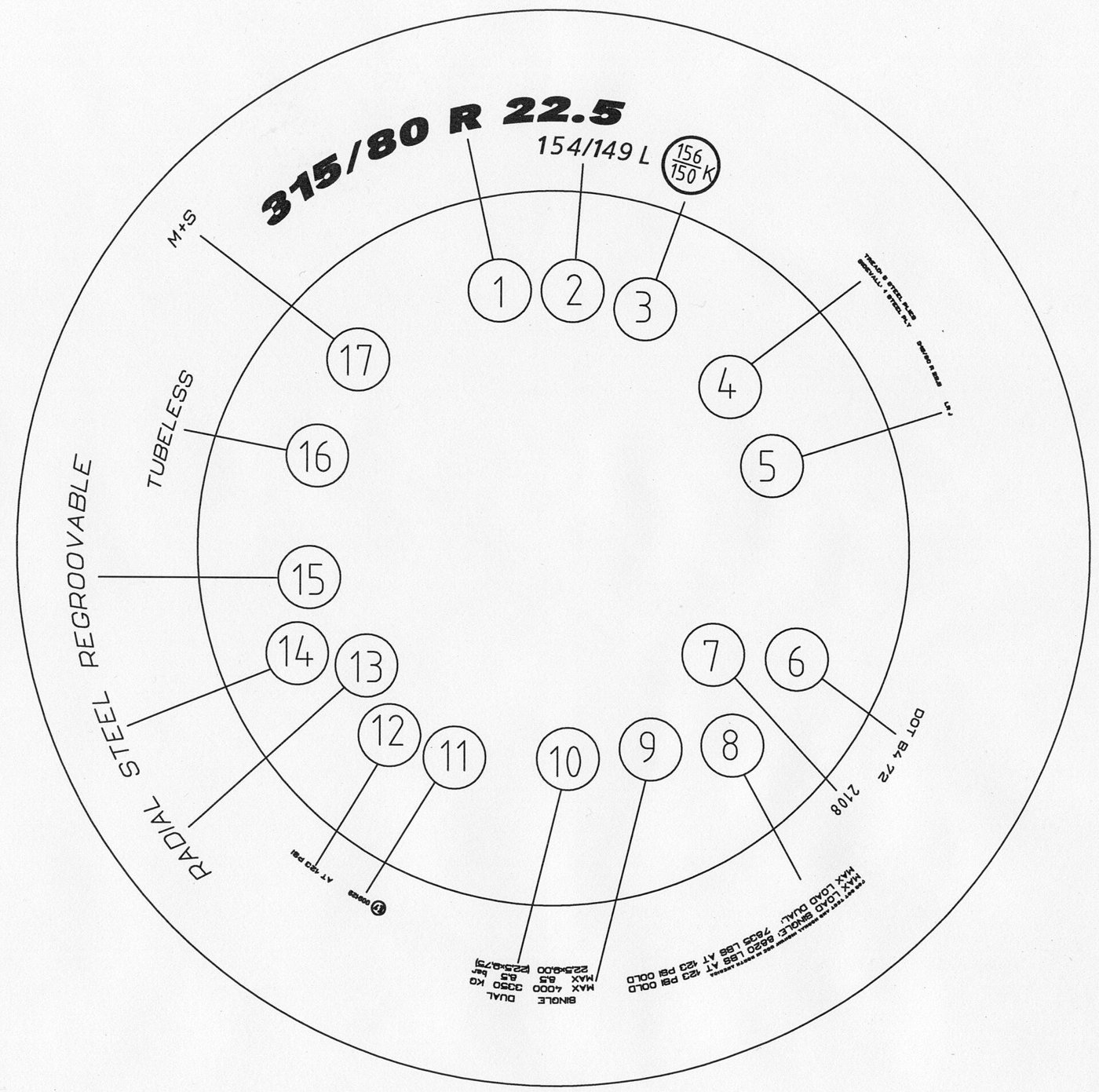
Quick answer Example: LT265/70R17 121S. LT = light truck tire (P = passenger). 265 = width in millimeters. 70 = sidewall height as a percent of the width. R = radial. 17 = wheel diameter in inches. 121 = load index. S = speed rating. For pressure, use the number on the tire placard in the driver’s door jamb or in your owner’s manual, checked cold. The number on the sidewall is the tire’s maximum, not the right pressure for your truck.
What you need
- Tire pressure gauge
- Your truck’s tire placard (driver’s door edge or door post) or owner’s manual
How to read it
- Find the size. It’s the biggest string of letters and numbers on the sidewall, like LT265/70R17.
- Tire type. A leading P means a passenger-car tire; LT means a light-truck tire.
- Width. The first number (265) is the tire’s width in millimeters.
- Aspect ratio. The number after the slash (70) is the sidewall’s height as a percentage of the width. Lower numbers mean a shorter sidewall.
- Construction. R means radial, which is what almost every modern tire is.
- Wheel size. The next number (17) is the wheel diameter in inches.
- Load index and speed rating. The code after the size (121S) is the load index (how much weight the tire can carry, from a chart) and the speed rating letter. Replacement tires should meet what your truck’s placard calls for.
- Age. Find the “DOT” code. Its last four digits are the week and year it was made: 2322 means the 23rd week of 2022.
- Right pressure. Look at the tire placard on the driver’s door edge or door post (or in the owner’s manual). That “recommended cold inflation pressure” is set by the vehicle maker for your truck. The “max press” on the sidewall is the most the tire should ever hold, not a target.
- Check it right. Check all tires, including the spare, at least once a month, when they’re cold: the truck hasn’t been driven for at least three hours. Add air until the gauge matches the placard.
Safety: Underinflated tires and overloaded vehicles are a major cause of tire failure. Don’t load past the weight limits on your placard.