My boys can’t picture a world where getting online meant tying up the phone line. Here’s what it was like.
Quick answer Before broadband, you got online with a modem over your home phone line, which meant nobody could call while you were on. People dialed into local bulletin board systems (BBSs), signed up for online services like AOL (whose free-trial disks showed up in the mail), browsed the brand-new World Wide Web with Mosaic and then Netscape, and built their own homepages on GeoCities.
See it for yourself
- The Internet Archive’s Wayback Machine (web.archive.org), which has saved much of the old web, including many GeoCities pages
The highlights
- Bulletin boards came first. The first dial-up computer bulletin board system, CBBS, was built in Chicago in 1978 by Ward Christensen and Randy Suess. Through the 1980s and into the ’90s, hobbyists ran BBSs where callers could dial in with a modem, leave messages and swap files.
- Dial-up was the on-ramp. Your computer’s modem dialed a number over the regular phone line. While you were online, the line was busy for everyone else in the house.
- The web got pictures. On April 22, 1993, students at the University of Illinois’ National Center for Supercomputing Applications released NCSA Mosaic 1.0, the first web browser to catch on with the general public. It could show images and text together on the same page. Free Windows and Mac versions followed in late 1993.
- Netscape took over. Mosaic’s project leader, Marc Andreessen, and Jim Clark founded the company that became Netscape Communications in 1994. Its Netscape Navigator browser quickly dominated the young web, before losing out to Internet Explorer.
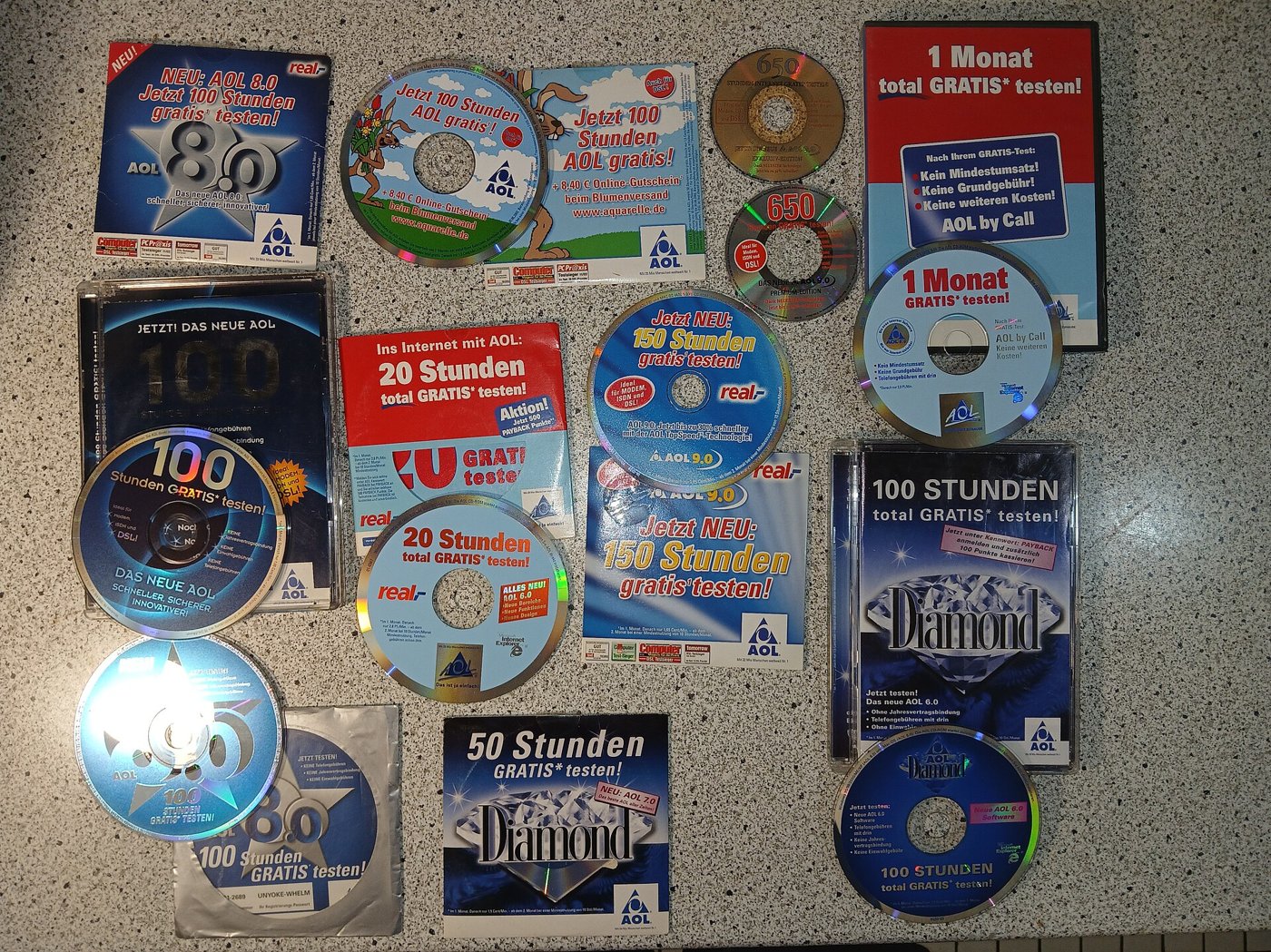
- AOL was in every mailbox. America Online mailed out free-trial disks by the millions. The Smithsonian’s National Museum of American History keeps one, a floppy from around 1995 offering 15 free hours.
- Everybody got a homepage. GeoCities started in 1995 as Beverly Hills Internet. Users, called “homesteaders,” built free pages in themed neighborhoods like “WallStreet” and “SiliconValley.” At its peak it was the third most popular destination on the web. Yahoo bought it in 1999 for $3.57 billion and shut it down on October 26, 2009.
- A lot of it was saved. The nonprofit Internet Archive has been archiving the public web since 1996 and ran a special project to save GeoCities before it closed.