Five minutes under the hood now and then can save you a long walk home.
Quick answer Park on level ground with the engine off. Check oil on the dipstick (between the marks), coolant in the see-through reservoir (between MIN and MAX, engine cold), brake fluid in its reservoir (between MIN and MAX), power steering if your truck has a reservoir, and washer fluid. Top off only with the exact type your owner’s manual calls for, and never open a hot radiator cap.

Tools & materials
- Owner’s manual (fluid types and locations)
- Clean rags or paper towels
- Funnel
- The correct oil, coolant, brake fluid and washer fluid for your truck
- Safety glasses and gloves
Steps
- Set up. Park on level ground, engine off, parking brake on. Open the manual to the maintenance section; it shows where each fill point is and what fluid goes in it.
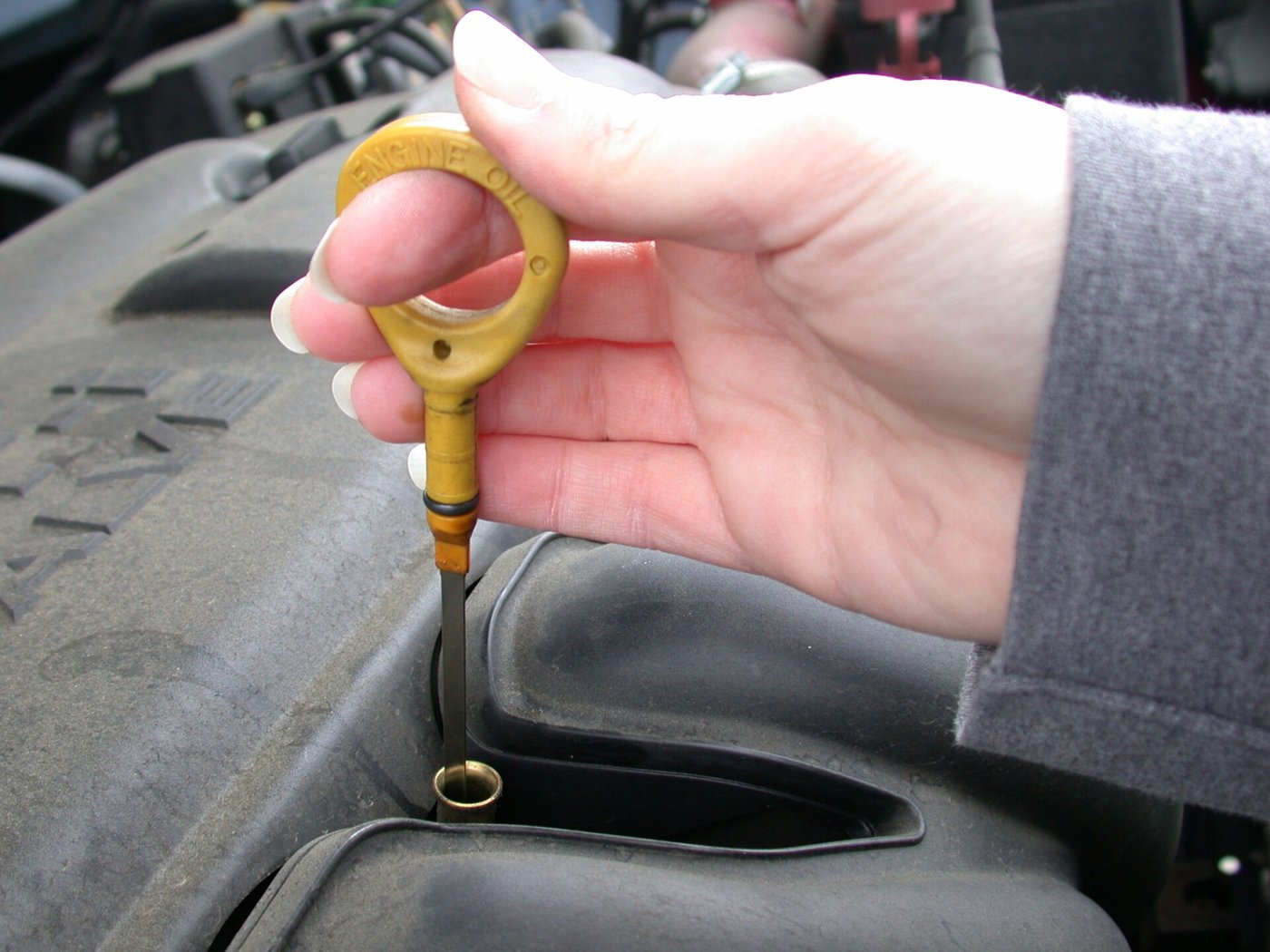
- Engine oil. Follow your manual on timing (some say check after the engine has sat for a while; some say warm it up, shut it off and wait a few minutes). Pull the dipstick, wipe it, push it all the way back in, pull it again and read it. The level should be between the low and full marks. If it’s at or near the low mark, add a little of the same type of oil through the filler cap, wait, and recheck. Don’t overfill.
- Coolant. Only with the engine cold. Look at the see-through overflow reservoir: the level should be between MIN and MAX. If it’s low, add the coolant type your manual specifies (usually a 50/50 mix of antifreeze and water) to the reservoir. If you’re adding coolant regularly, have it checked for a leak.
- Brake fluid. Wipe the reservoir cap clean before opening so dirt can’t fall in. Level should be between MIN and MAX. Add only the DOT type listed in the manual or on the cap, and don’t mix types. Fresh fluid is clear to amber; dark brown or black means it’s time to have it replaced.
- Power steering (if your truck has hydraulic power steering). Engine off. Check the reservoir’s markings or the dipstick on its cap, and top off with the fluid your manual specifies.
- Washer fluid. Fill the reservoir to the fill line with washer fluid, not plain water.
- Transmission and other fluids. Procedures vary a lot between trucks. Follow your owner’s manual or have a shop check them.
- Put every cap back on tight and close the hood until it latches.
Safety: Never remove a radiator or coolant reservoir pressure cap when the engine is hot; it can spray scalding coolant. Coolant is poisonous: wipe up spills and keep it away from kids and pets.
From https://www.djgaston.com/check-truck-fluids/ · Updated October 22, 2026