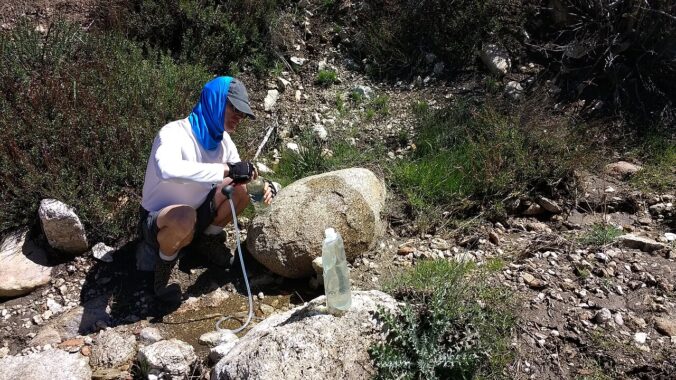
Around here the creeks and springs run so clear you can count the rocks on the bottom, and it’s tempting to just cup your hands and drink. Don’t. Clear water can still carry the stuff that’ll put you down for a week, and the same goes for tap water when a main breaks and the county puts out a boil order. Here’s how to make water safe to drink, whether you’re on a gravel bar, stuck at home after an ice storm or just want a plan before you need one.

Why clear water isn’t safe water
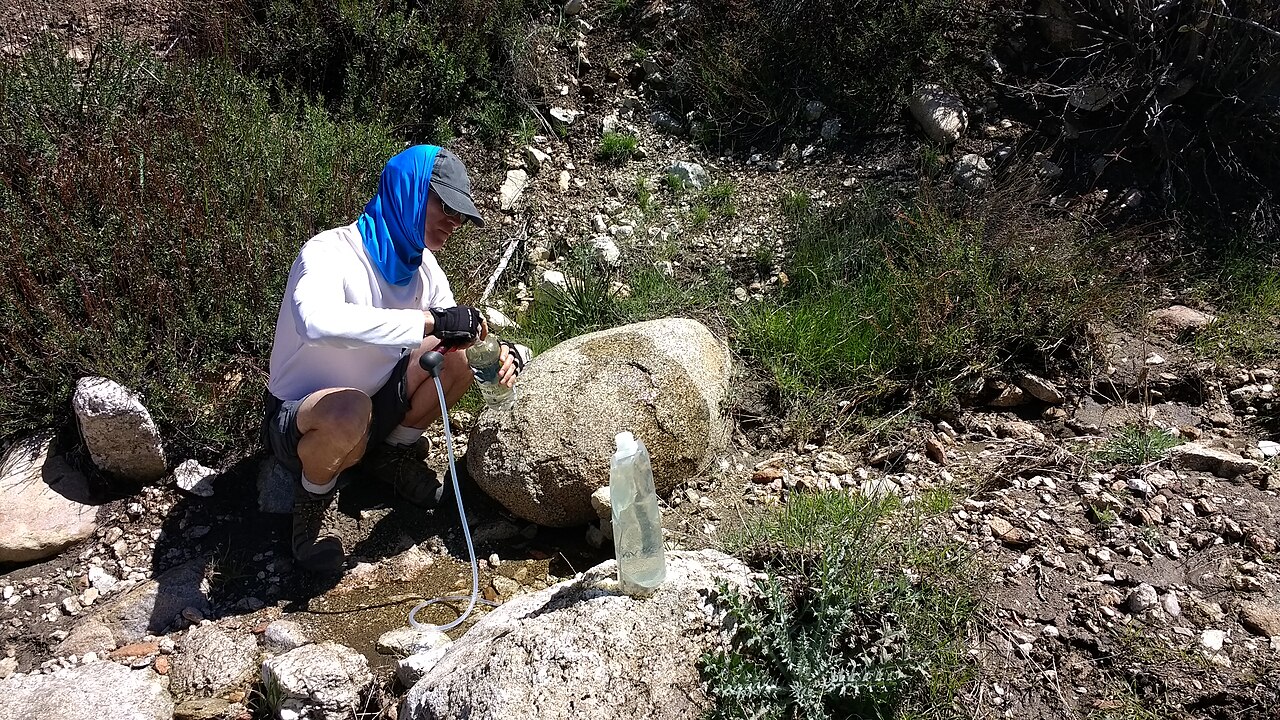
The CDC puts it plainly: water carrying bacteria, viruses and parasites sometimes looks clean, and drinking straight from a clear mountain stream is generally not safe. The germs mostly come from human or animal poop that washes into lakes, rivers and streams. In the Ozarks that can mean cattle in a pasture upstream, deer and other wildlife, a septic system, or just the last bunch of campers. You can’t see any of it.
The usual result is diarrhea, vomiting and stomach cramps. That’s miserable at home and dangerous on a camping trip, because you can get dehydrated fast. Kids, pregnant women, people over 65 and anyone with a weakened immune system are more likely to get sick.
Treat any water you’re not sure about before you use it for drinking, cooking, making ice, washing food, washing dishes or brushing your teeth. People forget that last one.
Step 1: Get the dirt out first
Every method below works better on clear water. Mud and floating bits shield germs from heat, chlorine and UV light, and they use up the chlorine you add. So if the water is cloudy:
- Let it sit in a clean container until the sediment settles to the bottom.
- Pour the clearer water off the top through a clean cloth, a paper towel or a coffee filter into another clean container.
This step doesn’t make water safe by itself. It just gets it ready for the step that does. And pick your source with some sense: the EPA says flowing water is generally better than still, stagnant water, and you shouldn’t use water with floating material in it, a dark color or a questionable smell.
Step 2: Boil it (the best method)
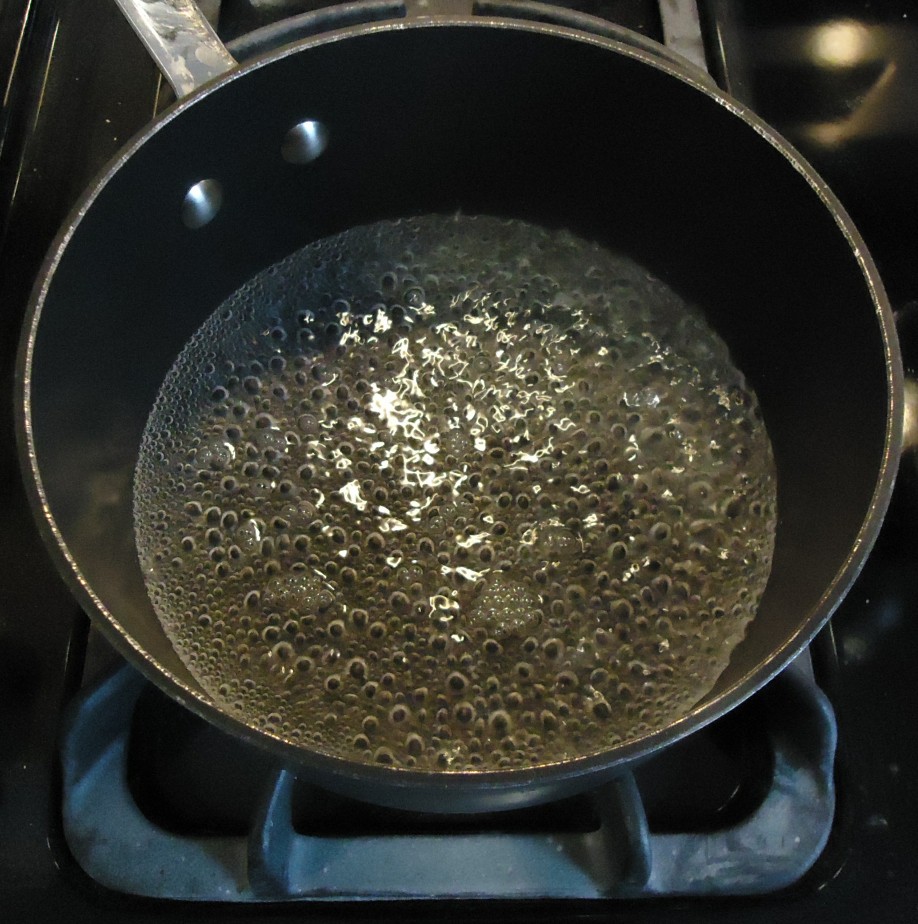

Boiling kills all the kinds of germs that matter here: bacteria, viruses and parasites, including the tough ones like Giardia and Cryptosporidium that chemicals struggle with. That’s why both the CDC and the EPA put it at the top of the list.
- Bring the water to a rolling boil, meaning big, steady bubbles, not just a few rising from the bottom.
- Keep it there for 1 full minute. At high elevations water boils at a lower temperature, so boil it for 3 minutes. The CDC uses 6,500 feet as the cutoff and the EPA uses 5,000 feet. Nowhere in Arkansas comes close, so 1 minute is the number for us. If you’re headed out West to hike, remember the 3.
- Let it cool on its own before you drink it, and store it in clean containers with lids.
Boiled water tastes flat. To fix that, pour it back and forth between two clean containers a few times to put some air back in, or add a pinch of salt per quart.
On a camping trip, a small backpacking stove and a metal pot will do it. At home in a power outage, a gas grill side burner or camp stove works, but use it outside, never in the house or garage. Some water will boil off, so start with a little more than you need.
Step 3: If you can’t boil, use bleach
Plain household bleach is cheap, most people already have it, and it kills bacteria and viruses. Here’s how the EPA says to do it:
- Use the right bleach. Regular, unscented chlorine bleach whose label says it’s for disinfecting or sanitizing, usually 6% or 8.25% sodium hypochlorite. No scented, “color safe” or bleach with added cleaners. It also needs to be fairly fresh: stored at room temperature for less than a year.
- Use a clean dropper so you can count drops.
- Add it, stir it, wait 30 minutes. The water should have a slight chlorine smell. If it doesn’t, add the same dose again and wait another 15 minutes.
- Double the dose if the water is cloudy, colored or very cold.
| Water | 6% bleach | 8.25% bleach |
|---|---|---|
| 1 quart or liter | 2 drops | 2 drops |
| 1 gallon | 8 drops | 6 drops |
| 2 gallons | 16 drops (1/4 tsp) | 12 drops (1/8 tsp) |
| 4 gallons | 1/3 tsp | 1/4 tsp |
| 8 gallons | 2/3 tsp | 1/2 tsp |
Bleach amounts from the U.S. EPA’s emergency disinfection guide. Check your bottle’s label for the percentage.
If the chlorine taste is too strong, pour the water between clean containers and let it stand a few hours before you drink it.
One big catch: bleach and iodine don’t do a good job on parasites like Cryptosporidium. That’s why boiling still wins, and why, out on the trail, you filter first and disinfect second.
Filters: what they really catch
Portable filters are great for camping, but they aren’t all the same, and most of the cheap pitcher and fridge filters in your kitchen aren’t designed to remove germs at all. They mainly make water taste better. Read the label for these terms:
- “Absolute” pore size of 1 micron or smaller, or certified to NSF standard 53 or 58 for cyst reduction or removal: removes parasites like Giardia and Crypto, but not viruses or all bacteria.
- Absolute pore size of 0.3 micron or smaller: removes bacteria and parasites, but not viruses.
- Reverse osmosis: removes parasites, bacteria and viruses (and salt), but it’s usually a home system, not something you carry.
“Absolute” matters. A filter with a “nominal” or average pore size of 1 micron has some holes bigger than that, so some germs can slip through.
Since most portable filters don’t stop viruses, the CDC’s advice for the backcountry is to filter, then disinfect the filtered water with bleach, iodine or chlorine dioxide tablets. Chlorine dioxide tablets can kill Giardia and are somewhat effective on Crypto, but filtering first is still the safest way to handle parasites. Whatever you buy, follow its instructions, especially the wait times, and keep the “dirty” side of a filter away from the clean side.
A couple of notes on the other gadgets:
- Iodine tablets: skip them if you’re pregnant, have thyroid problems or are sensitive to iodine, and nobody should drink iodine-treated water for more than a few weeks at a time.
- UV light pens and bottles: they can kill parasites, bacteria and viruses in small amounts of clear water. Cloudy water blocks the light, so filter first.
What none of this fixes: fuel and chemicals
Boiling, bleach and most portable filters handle germs. They don’t remove heavy metals, salts, fuel or most other chemicals, and boiling can actually concentrate them as water evaporates. If water smells like gas or diesel, has a chemical sheen, or came from floodwater that ran through somebody’s barn or shop, don’t drink it no matter how you treat it. Use stored or bottled water, or find a different source.
The one home method that does remove salts, heavy metals and most other chemicals is distillation, and Ready.gov describes a simple way to do it with a pot: fill the pot about halfway with water, tie a cup to the lid’s handle so the cup hangs right side up when the lid is turned upside down on the pot (not dangling in the water), and boil for 20 minutes. The water that condenses on the lid and drips into the cup is distilled. It’s slow and you only get a little, but it’s good to know.
Water you already have in the house
When the taps stop or there’s a boil order, you’ve probably got more drinkable water around than you think. The EPA lists melted ice cubes and the water in your water heater tank and pipes as emergency sources. If you drain the water heater, turn off its power or gas first, and treat the water if you’re not sure it’s clean.
If you’re on a private well and it floods, the EPA says to disinfect and test the well before you trust it again. Your county or state health department can tell you how; in Arkansas, your county health unit has Department of Health kits for testing private well water for bacteria.
How much water to keep on hand
The easiest way to avoid any of this is to have water stored before you need it. Ready.gov’s guidance:
- At least 1 gallon per person, per day, for several days, for drinking and basic sanitation. Kids, nursing mothers and sick people may need more, and in very hot weather needs can double. Don’t forget the dogs.
- Store-bought bottled water is the best choice. Keep it sealed in its original container in a cool, dark place.
- Filling your own? Use food-grade water containers. Wash them with dish soap, then sanitize them with 1 teaspoon of unscented bleach in a quart of water. Replace water you bottled yourself every six months.
- Don’t ration drinking water unless authorities tell you to. Drink what you need today and work on finding more for tomorrow. Drink the water you know is safe first.
For a family of four with a couple of dogs, three days of water is a lot more than one case of bottles. A few of the big blue water jugs in the garage are cheap insurance.
A simple water kit
For the truck, the camper or a go-bag, here’s what covers just about everything above:
- A metal pot and a small stove or a way to build a fire (see my guide to starting and putting out a campfire safely)
- A portable filter labeled for cyst removal (1 micron absolute or NSF 53/58)
- Chlorine dioxide tablets, or a small bottle of fresh unscented bleach and a dropper
- Coffee filters or a clean bandana for pre-filtering
- Two clean containers so you can keep dirty and clean water apart
More for the outdoors and emergencies
If you’re getting ready for the woods, learn a few basic knots everyone should know and how to tell which venomous snakes of Arkansas you might run into around a creek. At home, a little prep goes a long way: winterize your outdoor faucets and pipes before the next hard freeze, and if you end up stuck in the mud getting to the water, here’s how to recover a stuck truck safely.
Sources
- CDC, “About Water Treatment Options When Hiking, Camping, or Traveling” (clear water can be unsafe, boil 1 minute or 3 above 6,500 feet, filter then disinfect, filter pore sizes and NSF 53/58, chlorine dioxide and Crypto, iodine cautions, UV needs clear water, chemicals can’t be fixed by boiling): cdc.gov
- CDC, “About Choosing Home Water Filters” (most pitcher and fridge filters aren’t designed to remove germs, absolute vs. nominal pore size): cdc.gov
- U.S. EPA, “Emergency Disinfection of Drinking Water” (settling and pre-filtering, boil 1 minute or 3 above 5,000 feet, bleach type and drop table, 30-minute wait, other household water sources, flooded wells, boiling doesn’t remove chemicals): epa.gov
- Arkansas Department of Health, Water Microbiology Laboratory (private well water testing through local health units): healthy.arkansas.gov
- Ready.gov, “Water” (1 gallon per person per day, storing water, sanitizing containers, replace every six months, don’t ration, pot-and-lid distillation): ready.gov
Follow Danny on X: @djgaston19