A cheap multimeter is one of the best tools you can own. Here’s how to use it on a battery.
Quick answer With the engine off and everything shut off, a healthy, fully charged battery reads about 12.6 volts. Around 12.4 is roughly 75% charged, about 12.2 is half, and 12.0 or below is nearly flat. While cranking, it shouldn’t drop below about 9.6 volts. A parts store can also do a free load test.
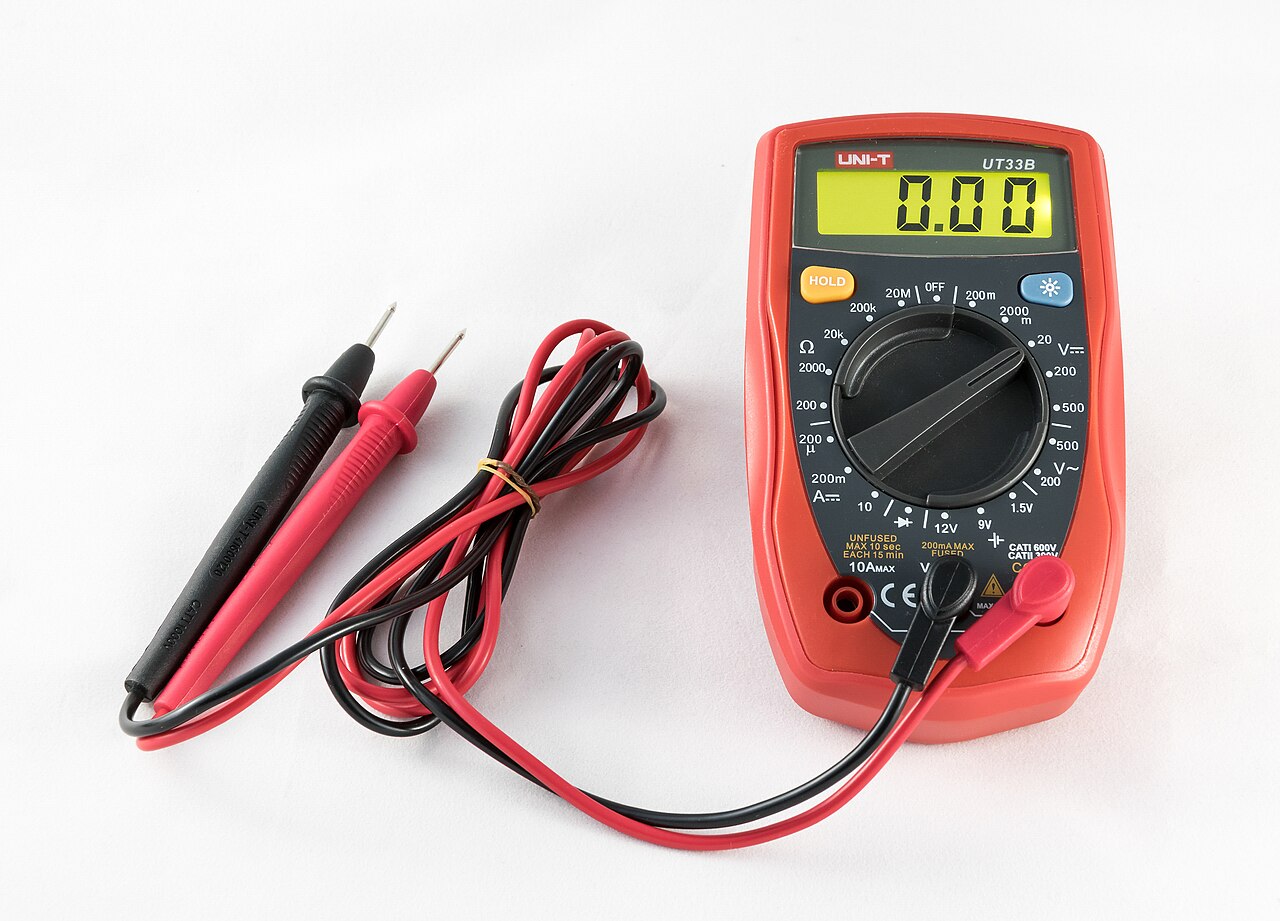

Tools & materials
- Digital multimeter
- Gloves and eye protection
- Wire brush (if terminals are corroded)
Steps
- Let the car sit at least an hour with everything off. Overnight gives the truest reading.
- Set the meter to DC volts, 20V range.
- Red probe on the + terminal, black on the −. Read the voltage.
- Read it: 12.6–12.8 V full; ~12.4 V about 75%; ~12.2 V about 50%; ~12.0 V about 25%; under ~11.8 V discharged.
- Cranking test: have a helper crank the engine while you watch the meter. If it dips below about 9.6 V, the battery is weak even if the resting number looked fine.
- Charging check: with the engine running, the reading should rise noticeably above the resting number. If it doesn’t, the alternator or wiring may be the problem rather than the battery.
- If it reads low, charge it fully and re-test the next day. A battery that won’t hold a charge needs replacing.
Safety: Keep tools from bridging the two terminals. Wear eye protection, and don’t smoke or make sparks near a battery.
From https://www.djgaston.com/test-a-car-battery/ · Updated October 22, 2026